The story Chinese embodied AI told investors has changed three times in a year. First a world model was enough. Then it had to be a world model with a factory pilot. Then it had to promise recursive self-improvement. Each turn made the pitch harder to sell, and the money that used to be spread across dozens of seed cheques has consolidated into a handful of names.
RoboScience closed an A2 round on 2 November, led by Amber Capital, Hongruida Investment and Shanghai Semiconductor Industry Investment, with 360 Strategic Investment, Shuang Capital, Guolian Minsheng and several listed-company vehicles following. The company has not disclosed the amount, describing it only as several hundred million yuan. It is the fifth round since the company began operating in March 2025.
Two engineers, one thesis
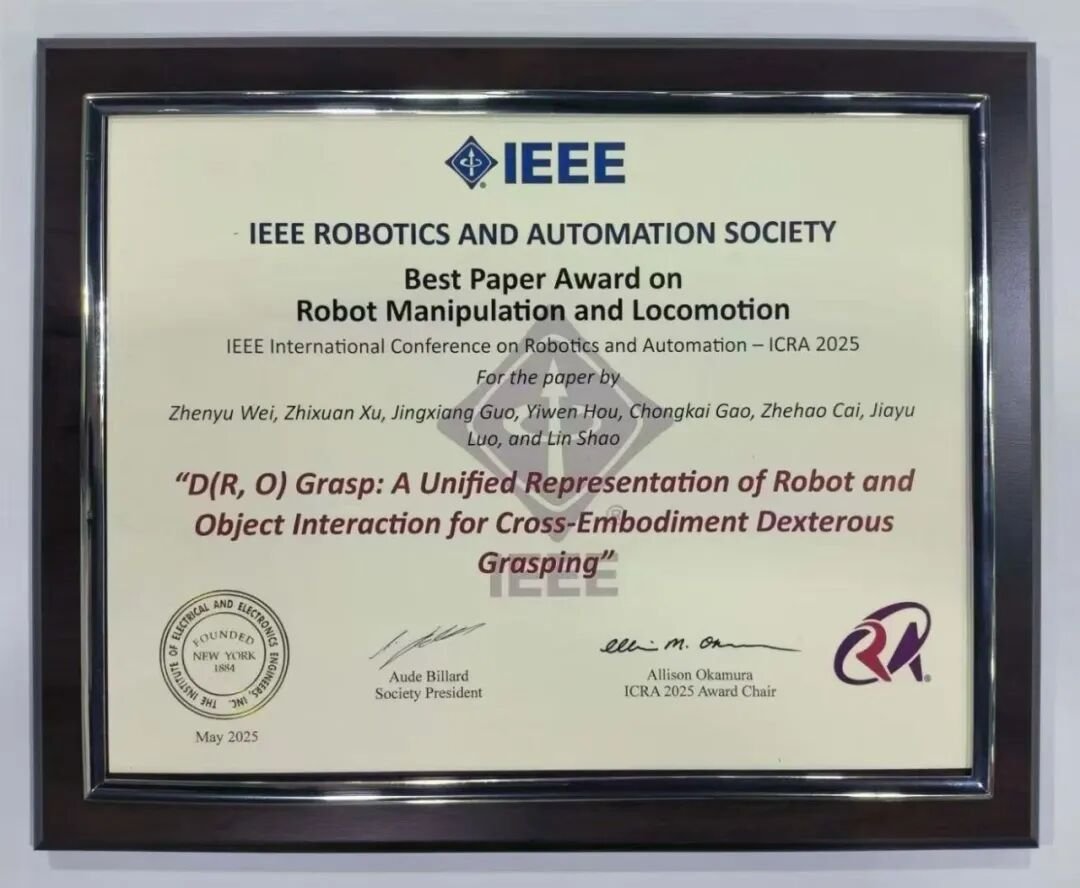
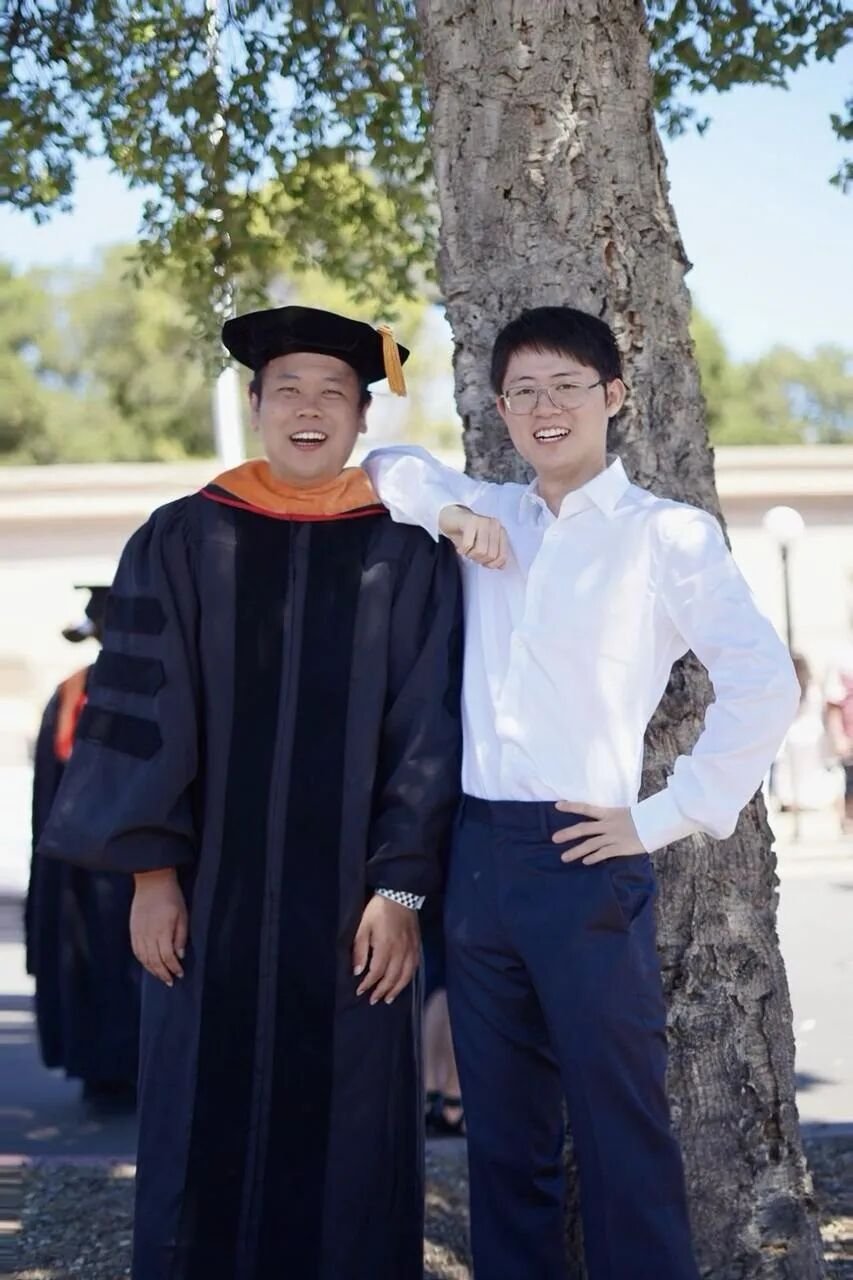
Shao Lin’s route runs through Leonidas Guibas and Jeannette Bohg at Stanford, then a faculty post at the National University of Singapore. His first-author work UniGrasp became a reference point for data-driven dexterous grasping, and in 2025 his team won the ICRA best paper award in manipulation, the first Asian institution to take it as lead author in five years. Tian Ye entered Stanford’s AI Lab the same year, worked under Andrew Ng, then spent seven years at Apple running its AI platform organisation, where he built the internal stack that staff compared to a private PyTorch and CUDA, plus a device-cloud inference system serving more than a billion users.
The pairing is the company’s actual pitch. One side supplies model generality across different robot bodies. The other supplies the discipline of shipping a system that has to work on hardware you do not control, for users who will not forgive a crash.
What twenty months bought
Three releases define the stack. RoboMirage, a simulation engine shipped in September 2025, was rebuilt from the solver up so that contact forces on thin objects and soft-rigid coupling could be simulated at useful speed. Combined with an automated video annotation pipeline, the company says it has pushed the cost of a single data sample to RMB 0.05, between one twentieth and one two-hundredth of conventional capture, with training video growing from one million to four million clips between early 2026 and October.
Visics, the general embodied model released in June, uses a vision-language-object-action architecture split into two engines. The upper layer predicts how an object moves in three dimensions. The lower layer translates that trajectory into control signals for whatever hand is attached. The interface between them is an object-centric point cloud path, not a joint command sequence.
The distinction matters commercially. A model trained on joint commands learns one robot. A model trained on how a cup moves can drive a Leap hand, a Shadow hand or something built next year. At WAIC this year the company demonstrated a single Visics model switching between different vendors’ dexterous hands in about thirty seconds without fine-tuning, then grasping objects handed to it by visitors.
The third piece is REX G1, a wheeled humanoid released in August that closes the loop. Simulation trains the model, the model drives the body, and the body’s failures return as data. RoboScience also built a cloud service with Tencent Cloud, selling manipulation as an API, and a plug-in controller for integrators who need to handle unstructured picking that classical automation cannot model.
The correction nobody wants to price

The context for this round is not euphoria. In October, Chinese embodied AI recorded 33 funding deals, roughly half September’s count, while total value held up because the money concentrated into later-stage companies with products. Existing shareholders have been selling secondary stakes at discounts of 20 to 35 per cent to exit before valuations reset. The number of humanoid units built in China this year is expected to pass 100,000, and the number actually doing productive work is far smaller.
That is the world RoboScience is raising into, and it explains the composition of the round. Industrial capital is prominent: strategic funds, listed-company platforms, a semiconductor investment vehicle. Industrial investors ask questions that financial ones do not. How long does the machine run unattended. How many days to add a new product category. What does the second deployment cost compared with the first.
The honest summary is that this round buys time to answer those questions, not proof that they are answered. Five rounds in twenty months is a statement about the team. The next twelve months will be a statement about the installations.
Editor’s note: This is an adapted translation of the original Leiphone report. It has been trimmed and restructured for readability for an international business audience. The full original (in Chinese) is at https://www.leiphone.com/category/ai/GqrJT2vlPFBxElDY.html.