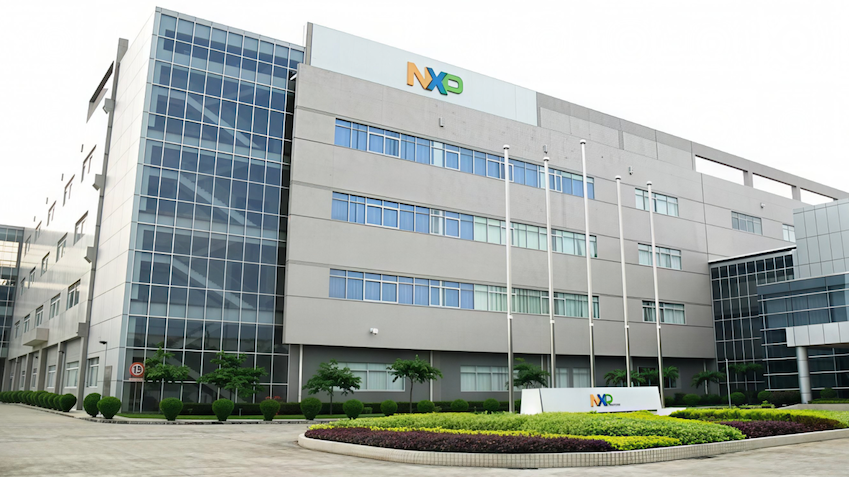
NXP has sent distributors a price adjustment notice covering parts of its distribution and direct supply lines, effective 1 January 2027. It is the third such notice the company has issued in 2026, after rounds in March and May, and all three cite the same drivers: materials, energy, labour, logistics and supplier inputs.
NXP is the largest supplier in automotive semiconductors, with a portfolio built around software-defined vehicle products: the S32 processor family, the S32N5 central compute platform, in-vehicle networking chips and radar. A third increase in a single year is not a signal about one company’s costs. It is a signal about who absorbs them.
The customer at the end of the chain
China’s passenger car industry earned RMB 8.04 trillion in revenue over the first nine months of 2026, up 2.6 per cent. Operating costs rose 3.8 per cent to RMB 7.16 trillion. Total profit fell 23 per cent to RMB 267.5 billion, and the cumulative margin sat at 3.3 per cent, continuing a multi-year decline.
September was worse than the average. The industry built 3.06 million vehicles and booked RMB 1.04 trillion in revenue, up 0.6 per cent. Costs rose 2.5 per cent. Monthly profit came to RMB 14.2 billion, down 68 per cent year on year, for a margin of 1.4 per cent, the lowest monthly figure in nearly four years. Divided across output, that is about RMB 4,640 of profit per vehicle.
A margin that thin has no room for a supplier passing through a cost increase. UBS estimates that memory chip inflation alone adds several thousand to tens of thousands of yuan to the bill of materials for a high-end assisted-driving vehicle. Add a microcontroller and networking increase on top and the arithmetic stops being about negotiation. It becomes about which models get built and which get delayed.
What a shortage looks like at the dealership

The clearest recent example is not a chip at all, which is the point. Li Auto’s product line manager apologised publicly after the 29-inch 6K panoramic display in the new MEGA went out of stock. The panel is a Samsung automotive OLED made exclusively for the model. Orders locked between 11 September and 26 October, scheduled for delivery between 10 November and 17 December, are affected.
The workaround is to fit the 29-inch 6K LCD used in the L9 Livis to keep deliveries moving, with Samsung OLED supply expected to recover by year end, a bulk screen replacement programme starting 1 March 2027 and a three-year service package as compensation. Earlier in the autumn, buyers who had locked orders with CATL’s 5C ternary pack were told the battery was unavailable and offered the company’s own Lianshan pack instead, with RMB 3,500 of benefits for continuing or a refunded deposit plus RMB 5,000 in compensation. In July, a headlamp supply wobble cost roughly 4,000 units of i6 output in a single month.
None of those parts is exotic. A screen, a battery, a headlamp. The constraint is not that China cannot make them. It is that a model-specific component with a single qualified source has no slack when the source stumbles, and the cost of that slack is now higher than the cost of the part.
The part of the story Chinese suppliers benefit from
There is a second-order effect that matters more than the price rise itself. Every round of increases makes the domestic alternative easier to justify. Chinese automotive chip suppliers have spent five years getting qualified on body control, infotainment and increasingly on chassis and driving functions, and a 30 per cent landed-cost gap changes procurement conversations that a pitch deck could not.
The counter-argument is equally real. When NXP raises prices because materials, energy and logistics are rising, domestic suppliers face the same input costs without the pricing power to pass them through, and their margins compress first. Cheap substitution works until the substitute has to absorb the same inflation.
The strategic conclusion for carmakers is unglamorous. In a 1.4 per cent margin month, the winners will not be the companies with the best product roadmap. They will be the ones whose bill of materials has two qualified sources for every part that can stop a line, and who negotiated that position before the shortage rather than during it.
Editor’s note: This is an adapted translation of the original Chedongxi report. It has been trimmed and restructured for readability for an international business audience. The full original (in Chinese) is at https://chedongxi.com/p/379207.html.