Wangyuan Technology received a filing notice from the China Securities Regulatory Commission on 30 October and is preparing a main board listing in Hong Kong, offering up to 12.69 million shares. If it prices, it will be the first pool cleaning robot company to trade publicly anywhere.
The category sounds minor until the numbers arrive. Wangyuan shipped the third-largest volume of pool robots in the world in 2024 and the largest from China, with about 9.2 per cent of the global market on shipment and gross merchandise value. In cordless models, the segment that is replacing the cable-fed incumbents, it holds 19.7 per cent and ranks first. Its products reach more than sixty countries.
Twenty years to catch a window
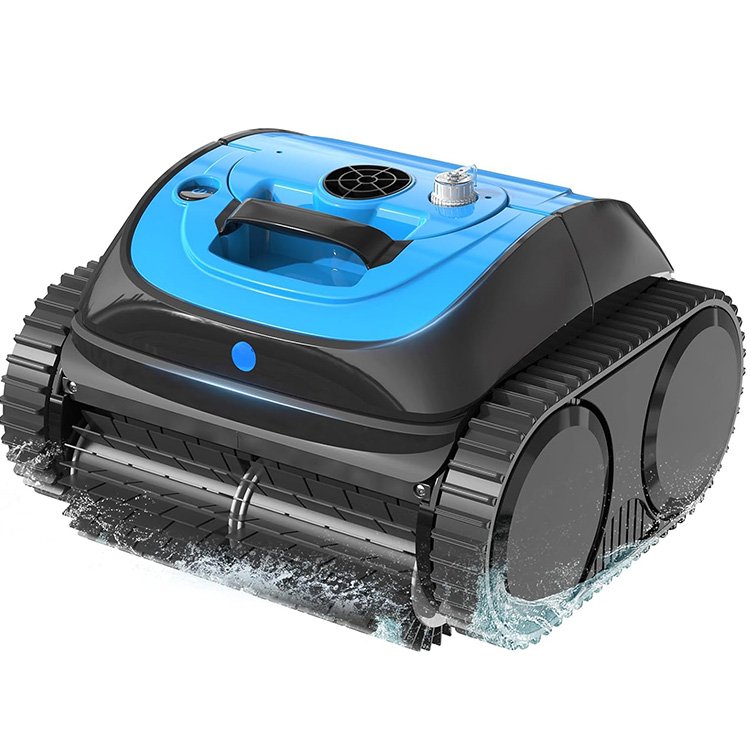
The company was founded in 2005 by Fu Guilan, who started the business at fifty after a career outside engineering, and her son Yu Qian. It spent its early years in original design manufacturing for overseas brands including Bestway, earning a manufacturing margin and no brand.
Four technical steps built the position. In 2009 it launched a light cleaner for above-ground pools at a third of the weight and less than half the price of conventional units, reaching break-even that year. In 2017 it shipped the industry’s first cordless lithium-powered pool robot, which is harder than adding a battery: IP68 sealing, underwater heat dissipation, cell safety, weight and runtime all have to clear at once. In 2019 it added automatic docking and self-charging. In 2023 it moved to acoustic positioning, underwater computer vision, 3D mapping, autonomous navigation and debris collection in the flagship WYBOT S3.
The timing was not luck. Cordless penetration in pool robots rose from 6.6 per cent in 2020 to 51.5 per cent in 2025, overtaking cable-fed products for the first time, and is forecast to reach 71 per cent by 2030. Wangyuan now takes 97.5 per cent of revenue from cordless units.
The numbers that do not flatter
Revenue grew from RMB 378 million in 2023 to RMB 812 million in 2025, a compound rate of 46.6 per cent. Gross margin rose from 57.5 to 62.9 per cent. Net margin went the other way, from above 30 per cent during an earlier mainland filing, to 16.1 per cent in 2023 and 12.4 per cent in 2025.
The cause is visible in the income statement. Selling and marketing expenses reached RMB 303 million in 2025, more than triple the RMB 97 million of 2023, growing above 70 per cent for two consecutive years and faster than revenue. Traffic, overseas after-sales and local sales teams are the line items. Brand revenue arrives later than brand spending, so the high gross margin is largely consumed before it reaches the bottom line.
Research intensity moved the other way. R&D as a share of revenue fell from 5.1 per cent in 2023 to 3.7 per cent in 2025, even as the absolute amount rose. That is a thin buffer in a category where domestic entrants are piling into cordless and the established Western brands are adding intelligence of their own.
Seasonality compounds the problem. Pool cleaning sells in the northern summer, and inventory rose from RMB 120 million in 2023 to RMB 282 million in 2025, with turnover days stretching from 248 to 293. Stockouts in season and markdowns out of season are both supply chain failures.
Governance, geography and the discount
Fu and Yu control 71.58 per cent of voting rights through layered holding vehicles. The company paid a RMB 85 million dividend ahead of its 2021 mainland attempt and another RMB 62 million before the Hong Kong filing, equal to half of that year’s adjusted net profit. Paying out and then raising working capital is legal and defensible. Public market investors tend to price it anyway.
The geographic exposure is the sharper risk. Some 93.1 per cent of revenue comes from overseas, with North America and Europe together at 85.1 per cent. Tariff changes hit landed cost directly, and patent disputes are a live cost of doing business: a United States Section 337 investigation has closed, but litigation continues in California and France, with outcomes that could include damages or a partial sales ban in a core market.
What the listing actually tests is whether a Chinese hardware company can convert a manufacturing advantage into a durable brand without paying more for distribution than the brand returns. Wangyuan has already proved it can take a category from Israeli and Spanish incumbents by changing the architecture of the product. Proving it can keep the profit is a different exercise, and the prospectus shows the cost of trying.
Editor’s note: This is an adapted translation of the original OFweek report. It has been trimmed and restructured for readability for an international business audience. The full original (in Chinese) is at https://robot.ofweek.com/2026-11/ART-8321202-12003-30710051.html.