Xiaomi put one robot brain through two tests in the same week: eight hours of continuous work on an automotive assembly line, and more than thirty minutes of household tasks across three rooms.
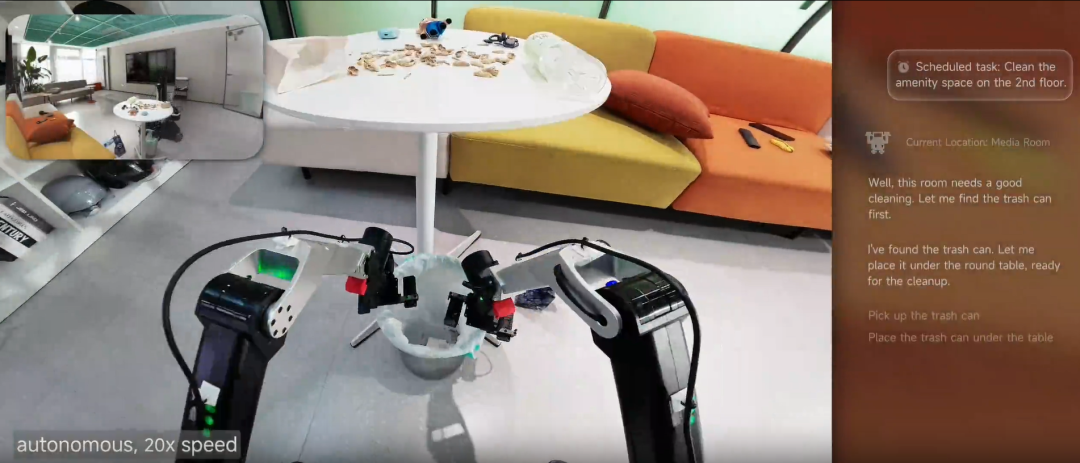
The industrial run took place at a final assembly station handling centre-console side panel sequencing. The domestic run covered the company’s youth apartments, spanned three rooms and completed more than 50 separate tasks in a single continuous session. Both used the same embodied base model.
Two different physics problems
A factory line is a rigid takt. The robot has to hit the same motion on a fixed cycle, and stability outranks everything else. A home is the opposite: unscripted disturbance, objects that appear mid-task, children who move. The capability being tested is dynamic obstacle avoidance and long-horizon generalisation, not repeatability.
Almost every Chinese robotics startup has chosen one side. Industrial players chase the near-term cash flow from a customer with a budget. Consumer players bet on a market that does not exist yet. Running both on one base is rare, and the reason is not hardware. It is data. Factory data and household data have different label structures, different failure modes and different tolerance for error.
The industry has already picked a sequence
The strategic logic behind the double test matches what other Chinese vendors are doing. Sazhi Intelligent’s six-arm platform is aimed squarely at lights-out factories, where the only metric is throughput per shift. Component makers are pushing in the same direction: Lixing is now sampling screw components into robot supply chains.
The sequence most companies have settled on is to make the industrial case pay first, then fund the household case with the cash flow. Xiaomi’s version of that argument is a claim about component reuse: if one base can drive both, demand for high-precision reducers, screws and sensors stops being single-purpose, and bill of materials costs fall across the line.
The caveats are real
Eight hours is a staged validation. It is not a year of uptime on a live line with changeovers, fault recovery and shift handovers. The distance between a clean eight-hour challenge and continuous production is where most robotics programmes have historically died.
The household test is further from revenue still. Thirty minutes across three rooms at a youth apartment complex is a controlled environment with cooperative subjects. A consumer spending tens of thousands of yuan on a household robot expects it to handle laundry, dishes and a floor that has not been tidied for a week, and the payback period on that purchase is measured in years.
What the test does establish is that Xiaomi is treating the household as a later phase of the same programme rather than a separate product. For a company that already sells into both factories and homes through its own channels, that is a cheaper position to hold than either of its competitors has.
Editor’s note: This is an adapted translation of the original OFweek report. It has been trimmed and restructured for readability for an international business audience. The full original (in Chinese) is at https://robot.ofweek.com/2026-11/ART-898890-8110-30710158.html.