A Middle Eastern sovereign wealth fund has invested in a Chinese laboratory-automation company, in one of the larger single bets on the physical side of artificial intelligence this year.
MegaRobo has completed a new funding round of nearly USD 200 million. Oman Investment Authority, the sovereign wealth fund of the Sultanate of Oman, participated as a new investor. China Merchants Capital, Suzhou Oriza and Sanjiang Zhaoshang joined the round, while existing shareholders including Asian Development Capital, Granite Asia and Innovation Works continued to add capital.
The round brings cumulative funding to about USD 600 million. It is the company’s tenth funding round since founding. The valuation was not disclosed, but MegaRobo had already entered the ranks of Chinese unicorns valued above RMB 10 billion.
Why a sovereign fund wrote the cheque
Oman Investment Authority is the most closely watched name on the cap table. Established in 2020, the fund managed about USD 60 billion in assets by the end of 2025 and invests across dozens of countries. It has previously backed artificial intelligence and commercial space, including companies associated with Elon Musk. Earlier this month it signed an agreement to help bring China’s automotive supply chain into Oman.
A Middle Eastern sovereign fund putting money into a Chinese lab-automation firm looks unusual. The logic is direct. Artificial intelligence is moving from text, images and code to molecules, proteins, cells and materials, all of which demand repeated trial and error in the physical world. That work is slow and capital-intensive, and it needs investors willing to wait. Sovereign capital, financial investors and local state funds coming together suggests a shared view of the cycle.
A decade of false starts
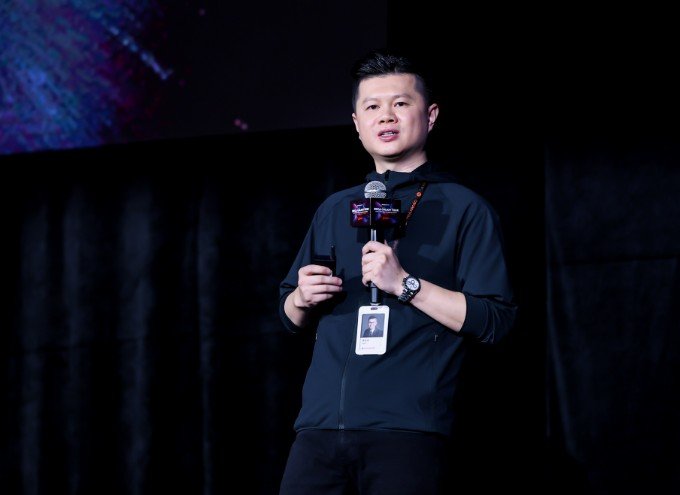
Founder and chief executive Huang Yuqing, 41, graduated from Xi’an Jiaotong University in 2008 and took a research role at a precision-instruments firm, where he met his two future partners. In 2016 the three raised RMB 5 million to build a general-purpose robot that could sit in a million laboratories.
Reality changed the plan. The team spent three years building robot bodies, only to learn after a 2018 prototype launch that customers wanted an entire workflow from experiment design to data processing, not a standalone machine. At the company’s third anniversary in 2019, Huang declared a restart and wrote off three years of work.
During the year it sought investment from Bosch, the company could not cover the next month’s payroll. Staff stopped taking salaries, and two co-founders photographed their property deeds and sent them to the group chat, ready to use them as collateral.
In the early months of 2020, with just RMB 20 million left, MegaRobo took a project to use robots for nucleic-acid testing. It went from meeting to first delivery in 25 days. Since 2019 the company has shifted to building automated laboratories. Its Kunpeng platform is now in its 4.0 version, moving from instruction-following to autonomous, agent-driven operation.
Can the data factory pay off
The company says it has delivered scientific-intelligence infrastructure to more than 500 clients, with the Kunpeng platform serving over 200. Recently the platform advanced 31 drug-discovery pipelines in seven months. One antibody team completed 18 targets and 56 rounds of dry and wet experiments in four months. Revenue grew from RMB 455 million in 2022 to RMB 930 million in 2024, with about 80 per cent still coming from China and overseas markets marked as the next frontier.
The harder question is how much of AI for Science has actually been delivered. The sector has promised much for years, yet no new drug has reached the market purely because of AI. Many companies remain loss-making, including peers such as QuantumPharm and Deep Potential.
The pain point is precise. AI can design in silicon far faster than the physical world can verify. MegaRobo’s bet is to turn the laboratory into a factory that produces reliable data at scale. It looks like a detour, but it lands on the real bottleneck. As AI begins to use its hands, the company that builds the laboratory first may travel further than the one that builds the model first.
Editor’s note: This is an adapted translation of the original OFweek report. It has been trimmed and restructured for readability for an international business audience. The full original (in Chinese) is at https://robot.ofweek.com/2026-11/ART-8321204-12005-30712659.html.