China’s automotive industry is converging on a single theme: the future of the car will be decided by software and ecosystem, not just mechanical performance. That was the message at the 2026 China Automotive Software Conference, held in Shanghai’s Jiading district on 19 and 20 November under the banner of innovation, intelligence and globalisation.
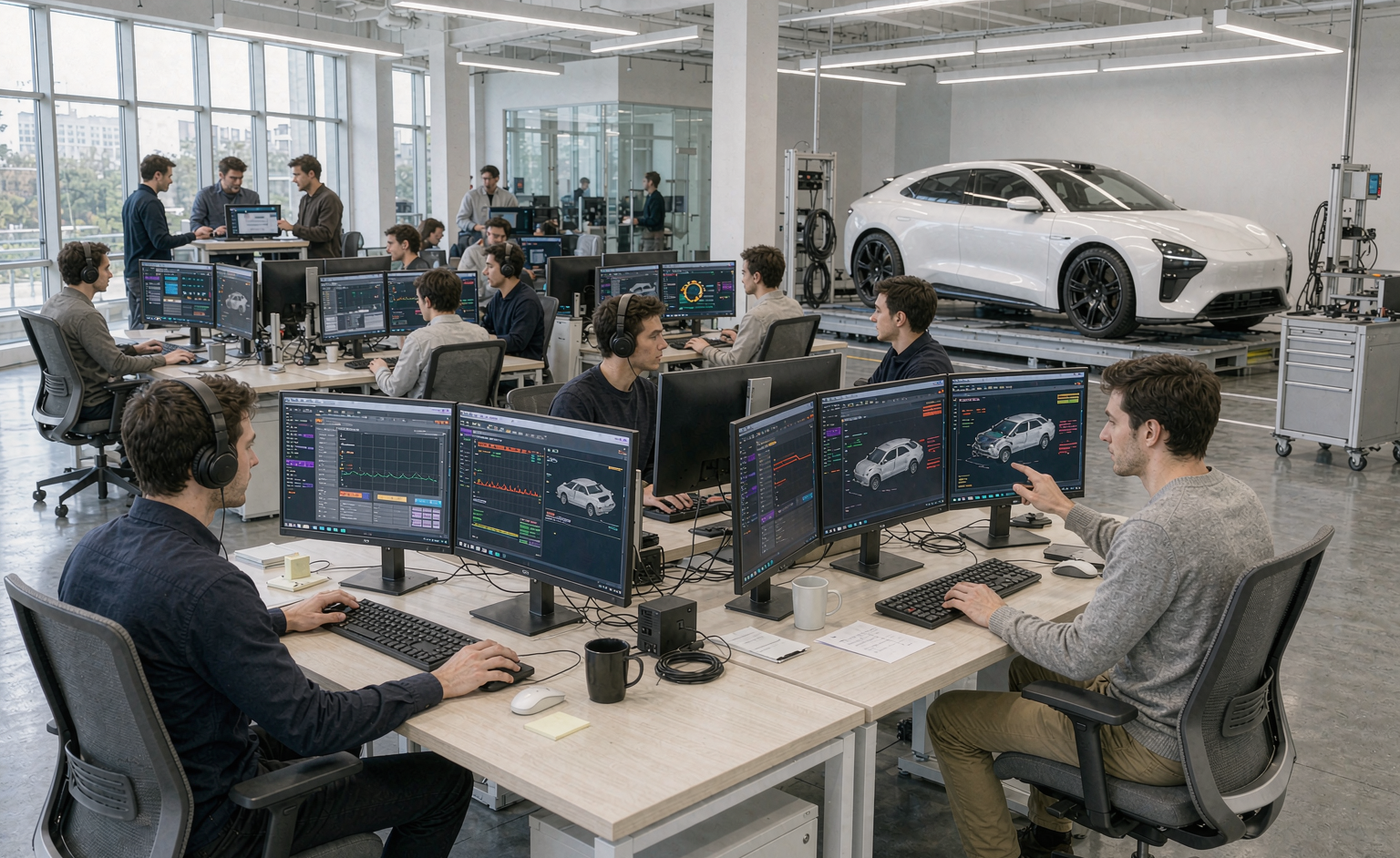
Organised by the China Association of Automobile Manufacturers and Shanghai International Automotive City, the event included a closed-door session, a main forum, four thematic forums and several product launches. Topics ranged from chip and software coordination and vehicle operating systems to embodied intelligence in the auto industry, trusted data sharing and cabin interaction.
From scale to technology advantage
2026 marks the start of China’s fifteenth five-year plan and a shift from scale and market advantages to technology-system and global-ecosystem advantages, the organisers said.
Fu Bingfeng, vice chairman and secretary-general of the auto manufacturers association, said China produced and sold more than 14.4 million new-energy vehicles in the first ten months of the year, over 54 per cent of total vehicle output. New-energy exports have become a major driver of growth, and penetration of Level 2 combined driver-assistance in passenger cars has passed 70 per cent.
He called on the industry to strengthen standards, deepen the use of AI to raise efficiency, quality and safety, and improve independent innovation in basic software. He also urged deeper international cooperation on technical standards and rules.
A representative of the Shanghai municipal economy and information commission said global competition is shifting from whole-vehicle performance to software and ecosystem. Software-defined vehicles, data-driven design and AI reshaping the travel experience are irreversible trends, the official said, calling for a vehicle-grade software engineering system, autonomous toolchains and participation in international standard-setting.
A new software park and a data white paper
The conference hosted several launches. A new carrier for the International Automotive City Software Park opened, covering 40,000 square metres with a national-grade 10-gigabit optical network and a high-performance computing centre to support the validation of driving algorithms and vehicle-grade software. The first batch of tenant companies signed on.
Tongji University’s School of Mechanical Engineering and Robotics signed a strategic cooperation agreement with Shanghai International Automotive City, aiming to move robotics research out of the laboratory and into production lines.
A white paper on trusted driving data for high-level autonomous-driving insurance was published by the industry association with CPIC, Shanghai International Automotive City, Dongfeng, Changan, GAC and other partners. It focuses on Level 4 driving and sets out risk systems and insurance mechanisms, as well as cross-institution data collaboration under a trusted data space.
Several car-industry AI agents were also connected to a trusted data space built by the association, in a sign that data infrastructure is becoming as important as the software stack itself. For suppliers and carmakers, the conference underscored a simple point: the next phase of the Chinese auto industry is being written in code.
Editor’s note: This is an adapted translation of the original Gasgoo report. It has been trimmed and restructured for readability for an international business audience. The full original (in Chinese) is at https://www.gasgoo.com/apps/e060bad9eca91db7f01403fc7120041f/robot/news/70478677-%E5%90%91%E6%96%B0-%E5%90%91%E6%99%BA-%E5%90%91%E5%85%A8%E7%90%83/.