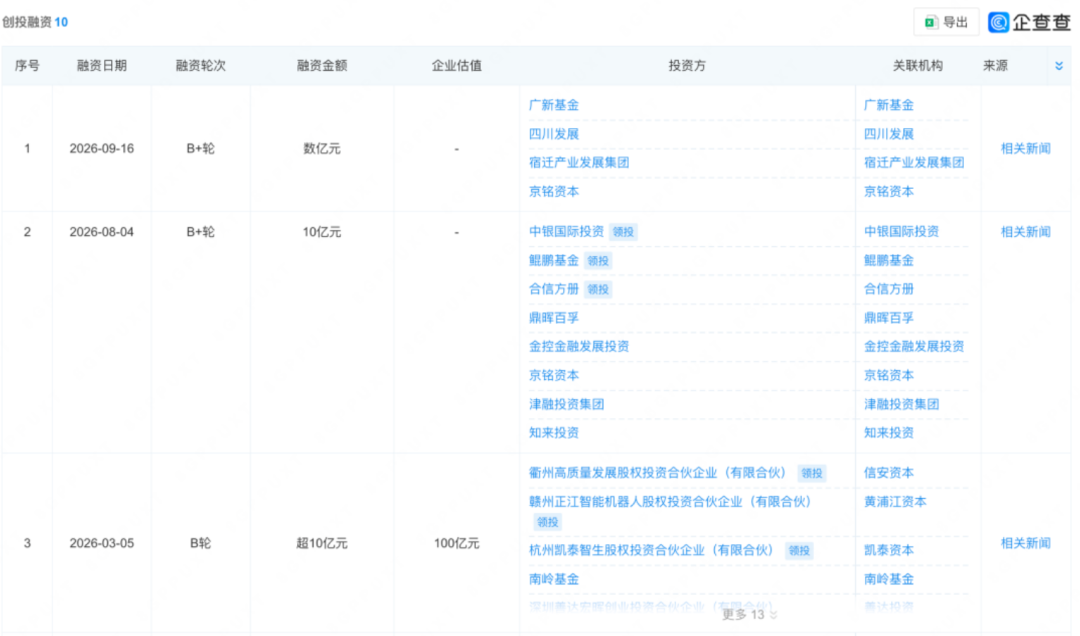
On 16 September PaXini completed a several-hundred-million-yuan Series B+ round and filed for IPO tutoring with the Beijing regulator. Founded only five years ago, the embodied-perception company has drawn industrial capital from Samsung, BYD and JD, with cumulative financing above 4 billion yuan and a post-money valuation past the 10-billion-yuan unicorn line.

Why the industrial stampede. BYD led with a several-hundred-million-yuan strategic investment in April 2025 as the largest external shareholder, then Samsung and JD followed. The consensus in humanoids is that vision only sees the world but touch truly feels it, and the tactile sensor is the hardware base for fine manipulation that cannot be bypassed.
Carmakers need dexterous actuators for smart-manufacturing lines, consumer-electronics giants are building next-generation robot hardware, logistics firms want flexible sorting, and each needs a reliable tactile-supply partner. PaXini’s full stack of hardware, simulation and data matched that demand.
But rivals stay rational. No tactile route is settled, with Hall-array, piezo-resistive and optical vision-tactile approaches competing, and impressive spec sheets still sit far from mass-stable production. Heavy industrial backing signals belief in the sector’s long-term value, not that commercialisation is solved.
Can the full chain crack the pain. Unlike firms focused on a single component, PaXini built the whole path of chip, sensor, dexterous hand, humanoid body, simulation platform and embodied dataset, open-sourcing its GEN4 FUSE somatic chip, Feelix simulation platform and OmniSharing DB dataset, forming a loop where hardware yields data and data feeds the model.
Two industry pains meet that model. Tactile data cannot be scraped like internet text and must come from real physical contact, keeping collection costly and throttling model iteration. And with no common calibration standard, different sensors’ data barely interoperate. But full-chain mode multiplies R&D cost, and an unprofitable startup burns cash faster, the real test when it reaches the public market.
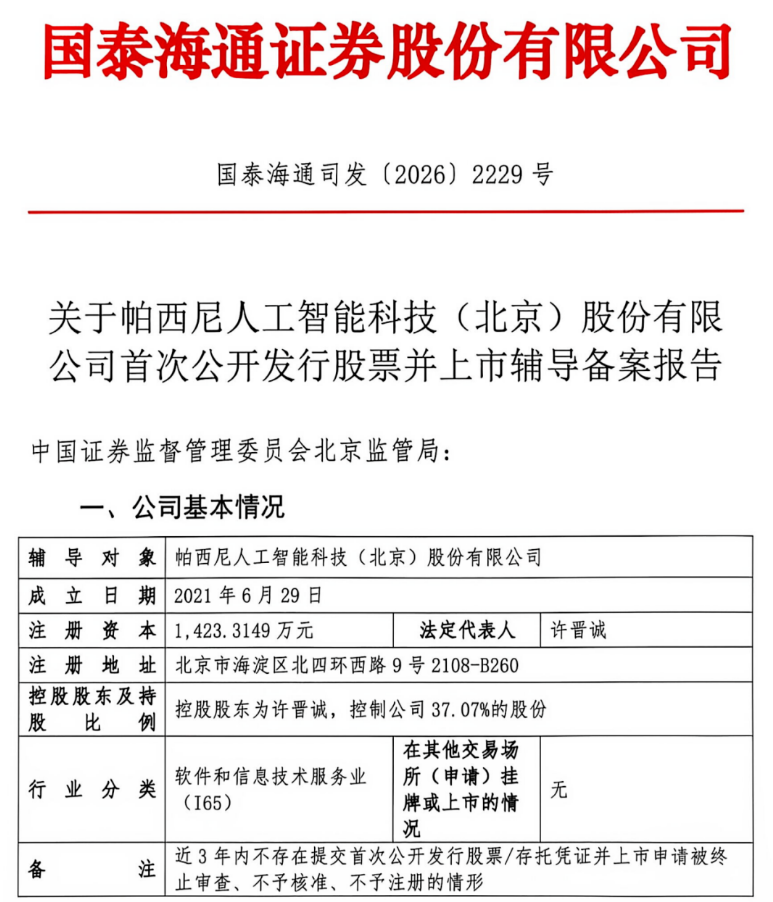
Five years to a 10-billion valuation. Founded in 2021 and restructured and moved to Beijing in 2026, PaXini is first-tier by speed. More than ten 10-billion-yuan embodied-AI firms have emerged in China this year, but the secondary market now sends a clear signal that it will no longer pay for concepts alone, and orders and delivery ability become the harder yardstick.
The whole tactile industry still fights consistency and durability, with same-batch sensor drift and fast wear in long runs. PaXini earned an entry ticket; the real exam comes after mass deployment. It must balance innovation with commercial delivery, rethink the boundary between full-stack build and ecosystem collaboration, and resist the myth that touch alone solves the humanoid.
Editor’s note: This is an adapted translation of the original OFweek report. It has been trimmed and restructured for readability for an international business audience. The full original (in Chinese) is at https://robot.ofweek.com/2026-09/ART-898890-8420-30704207.html.