Toyota is developing a new-generation hybrid system for its multi-pathway vehicle platform, and the engineering choice behind it is more consequential than the fuel economy target.
Rather than adapting existing engines for hybrid duty, Toyota has developed the engine, the hybrid system and the power control unit together as a single powertrain. The new family is built around a four-cylinder 1.5-litre engine in both naturally aspirated and turbocharged forms, paired with lighter and more compact electric motors, power control units and inverters. The stated target is a fuel economy improvement of more than 15 per cent.
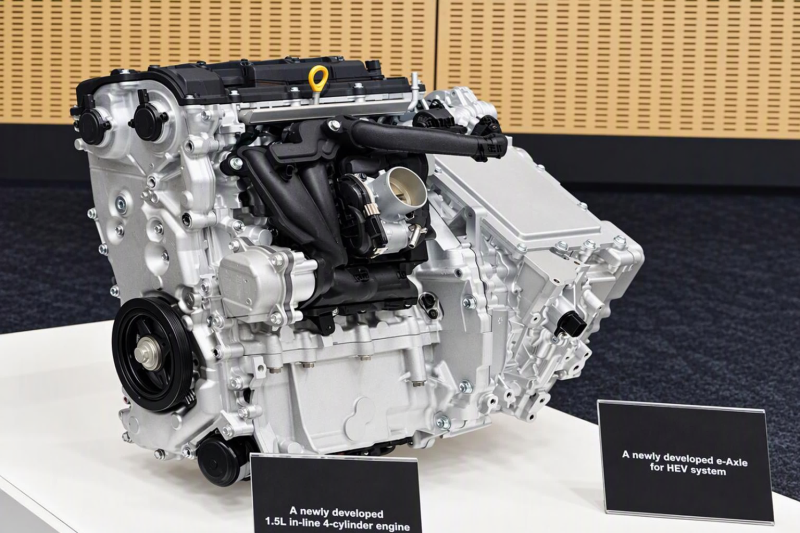
Designed for the motor, not converted for it
The distinction matters because it determines where the efficiency comes from. Retrofitting a hybrid system onto an existing engine forces compromises in combustion chamber design, thermal management and packaging. Developing the engine with electrification as the starting constraint allows the whole assembly to shrink.
Smaller engines and a lower hybrid stack also lower the bonnet line. That is a styling freedom as much as an aerodynamic one, and it gives designers room to build the smoother proportions that sell in markets where electric vehicles have already reset expectations of what a modern car looks like.
The naturally aspirated version is sized to cover the hybrid performance envelope currently handled by Toyota’s 1.8-litre four-cylinder and 1.5-litre three-cylinder engines, which suggests a straight replacement path across the core hybrid range rather than a new tier above it.
One architecture, three powertrains
The strategic core is that battery electric, plug-in hybrid and hybrid models will share a common architecture. Spreading research, development and production investment across a larger combined volume produces economies of scale that a single-powertrain platform cannot reach, and Toyota argues this comes without compromising the performance or function of any individual model.
The same architecture is intended to let a plant adjust its powertrain mix smoothly in response to demand. That is the manufacturing expression of Toyota’s multi-pathway argument: energy conditions, customer preferences and policy timelines differ by country, so the company keeps several electrified options in production and shifts the weighting market by market.
For European suppliers, the implication is a longer demand tail for combustion-adjacent components than a pure battery electric roadmap would suggest, coupled with tighter cost pressure as Toyota amortises new tooling across a wider base.
The bet inside the decision
Toyota is wagering that the transition will be uneven rather than uniform, and that the ability to flex production mix will matter more in the 2027 to 2030 window than betting everything on one drivetrain.
That bet has a clear cost. A new engine family plus new motor, inverter and power control hardware is a full powertrain programme, funded at the same time as the company’s battery electric line-up. The 15 per cent economy gain has to carry that investment across a hybrid volume base that competitors are actively attacking with cheaper plug-in hybrids and range-extended electric vehicles.
The multi-pathway platform is the mechanism that makes the arithmetic work. Whether it holds depends on how quickly the markets Toyota serves actually converge, and on whether a 15 per cent improvement is enough to keep hybrid competitive once battery costs fall further.
Editor’s note: This is an adapted translation of the original Gasgoo report. It has been trimmed and restructured for readability for an international business audience. The full original (in Chinese) is at https://auto.gasgoo.com/news/202610/29I70476287C109.shtml.