The 60.13 percent question
On 6 August, Unitree set its issue price at 150.80 yuan per share, dropping book-building. The prospectus shows 40.45 million new shares, 10 percent of the post-issue total, raising about 4.20 billion yuan at a 42 billion yuan valuation. Post-issue, Unitree (688836.SH) is worth about 61 billion yuan at a stunning 219.23x earnings multiple. The stock opened STAR Market book-building on 7 August, with online roadshow and subscription on 10 August.
This is the A-share humanoid first listing accepting market pricing, but the first signal is more complex than 61 billion. On one side, institutions bid the value from 42 billion up to 61 billion. On the other, 171 executives joined the strategic allocation for about 270 million yuan, with chairman Wang Xingxing putting in 15 million of his own, locks of 12 and 36 months signalling long-term faith.
Doubt about humanoids is hardening into a system. Baidu’s Li Yanhong said in 2023 that making machines human was the wrong direction; Rodney Brooks called the humanoid a bubble. In 2026 the scepticism went mainstream: Zhang Jun warned of “capacity without demand”, and a CGTN debate on embracing humanoids was won by the opposed side at 56 percent. Bain Capital Ventures’ Ajay Agarwal called humanoids demo products that may stall at the demo stage.
What 60.13 percent really means
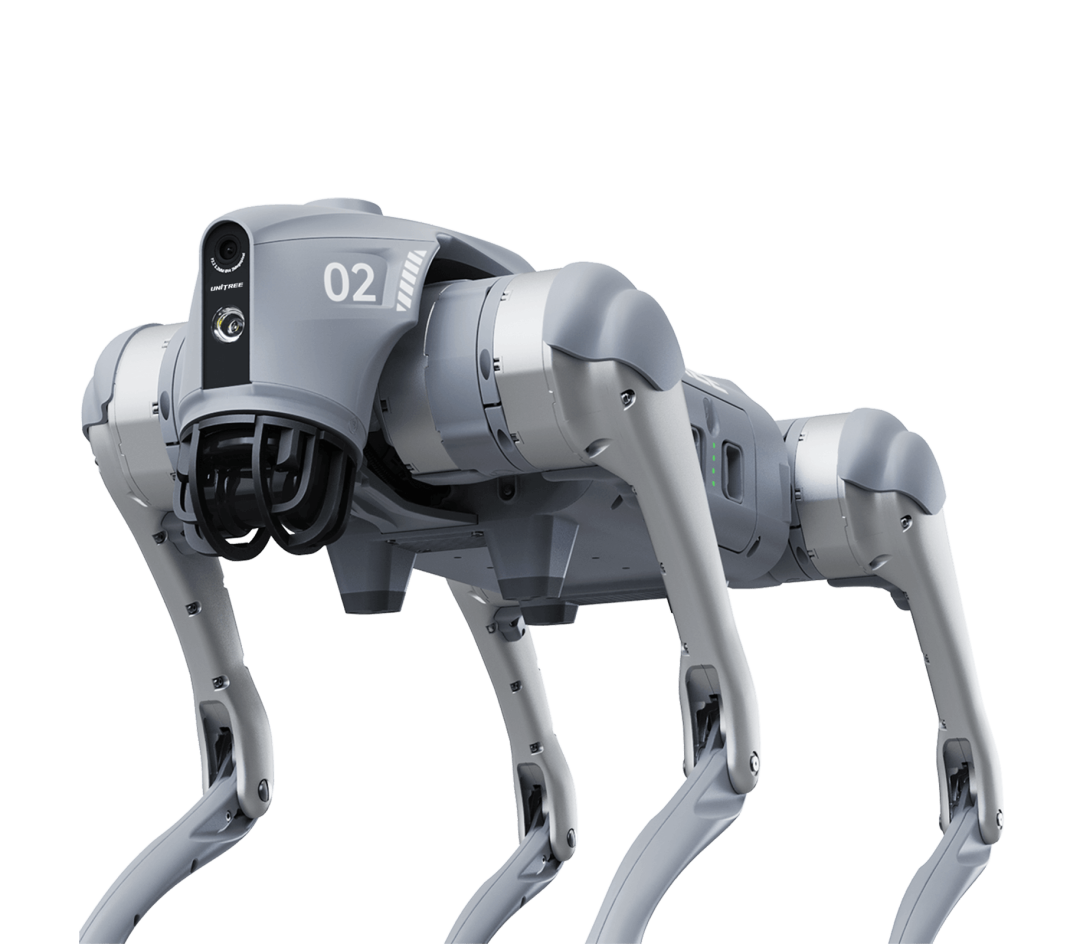
For a decade, Unitree was “the robot-dog company”. Its quadrupeds shipped over 30,000 units with more than 60 percent global share. In 2023, quadrupeds were 75.78 percent of revenue and humanoids just 1.88 percent. By 2025, humanoid revenue hit 868 million yuan, 51.78 percent of the total, overtaking quadrupeds (698 million, 41.62 percent). In three years Unitree became a humanoid-majority company, betting on a lane that is still debated.
Hidden in the prospectus is the margin: a 60.13 percent gross margin on the core business. In manufacturing that is well above peers. FANUC holds 35 to 40 percent after half a century; ABB’s robot unit dipped to 9.1 percent in Q2 2025; CATL’s battery margin fell from 43.7 percent in 2016 to 22.41 percent in 2025. Listed peers sit near 37 percent; Unitree hit 60 percent at volume takeoff.
The worrying version: if a contested lane’s margin is double peers, has the 61 billion yuan price already discounted a fall back to the manufacturing mean? Is the high margin a moat or a signal that attracts competition?
A sandbox stress test
The 60.13 percent is a blended figure hiding a shift. Humanoid margin fell from 87.67 percent (2023) to 68.44 percent (2024) to 62.91 percent (2025 nine months), down nearly 25 points in three years, while quadruped margin rose from 51.50 to 55.49 percent. The blended rise came from humanoids growing from under 2 percent to 51.78 percent of revenue, not from higher prices.

The price-cost scissors is sharper. Average humanoid selling price fell from 593,400 yuan (2023) to 260,400 (2024) to 166,400 (2025); the R1 two-arm launched at 26,900 yuan, a near 95 percent drop in three years. Unit cost moved only from 73,200 to 62,200 yuan, down 15 percent. Margin now rests on pricing power, not cost cuts.
Unitree’s margin has one crutch: customers. In 2025, 73.6 percent of humanoid revenue came from research and education, budgets flush and price-insensitive. But that ceiling is low. One analysis sizes the global top-200 universities at 50 units each, a 10,000 unit pool Unitree could fill in two years.
When the margin breaks
In 2025 Unitree earned about 1.708 billion yuan, with net profit near 600 million and gross profit around 1.02 billion on 420 million yuan of expenses. Q1 2026 revenue of 423 million yuan was up 68.49 percent, but net profit excluding non-recurring items fell 52.55 percent to 40.25 million. The drag is spending: R&D was just 90.21 million yuan (a 7.73 percent rate, far below the 27.92 percent peer average), and the gap will be expensive to close.
A sandbox: at 2 billion yuan revenue with 700 to 800 million yuan of expenses, a 50 percent margin leaves 200 to 300 million yuan of profit; at 40 percent it breaks even; at 30 percent it loses money. Below 35 to 40 percent, Unitree slides from profit star to cash burner. Cerebras (May 2026) and Tesla (Q2 2026, auto margin 19.2 to 16.3 percent, a 200 billion US dollar wipeout) show the same rule: when margin falls, the market forces a re-rate from tech stock to manufacturer.
How the price war unfolds
A high margin in any contested hardware business invites a full cycle: entry, price war, shakeout. In the first half of 2026, embodied-AI funding passed 93.5 billion yuan. Three forces turned talk into war: mature supply chains (cores from EV and consumer electronics), scale (Unitree and AgiBot each target over 10,000 units), and competition (Unitree and AgiBot hold nearly half the market).
Prices collapsed. Unitree’s humanoid fell from 593,400 to 166,400 yuan, then the R1 to 29,900; Accelerate’s K1 promoted at 29,900; Songyan’s Bumi dropped to 9,998 yuan; Leju cut 100,000 yuan; industrial humanoids fell from 500,000 to 1 million yuan per unit to 200,000 to 300,000. The loop is self-reinforcing: cut price, grab share, expand capacity, cut again.

The end is divergence, re-rating and shakeout. The industry median margin fell from 39 percent (2024) to 35 percent (2025). Leju’s blended margin slid from 50.45 to 40.78 percent as losses widened; Rokae’s embodied margin crashed from 30.6 to 10.7 percent. Margin collapse is already real for some.
A Chinese manufacturing coordinate
Place embodied AI on China’s manufacturing map and the story is familiar. Solar went from profit to industry-wide loss as overcapacity hit. CATL’s battery margin fell about 50 percent over a decade, yet it defended profit with tech premium, overseas expansion and storage. FANUC’s ceiling is about 40 percent. If embodied AI matures toward industrial robots, today’s 50 to 60 percent is a peak, not a norm.
The 60.13 percent margin will not hold on applause. High margin is the early gift, not a permanent right. Excess profit draws capital, capital builds capacity, capacity triggers a price war, a chain proved again and again in Chinese manufacturing. Who survives the mean reversion is the question Unitree’s listing hands to the market.
Editor’s note: This article is based on reporting by OFweek Robot (Zhixie Dao). Read the original in Chinese here: https://robot.ofweek.com/2026-08/ART-898890-12003-30697436.html.