Roland Berger’s new report, “Humanoid Robots 2026: The Convergence Moment of a New Market,” marks a shift in the debate. The question is no longer whether humanoids are a bubble, but who grabs the position if the industry actually takes off.
Three variables converged at once. AI capability — vision-language models, generative AI, edge computing, control algorithms — lets robots act after perceiving their environment. Core hardware subsystems (compute, sensing, actuators, power, structure) entered pilot validation, though not mass commercial use yet: runtime is 2 to 8 hours today against a 16-hour target, and key subsystems still need a 50 to 90 per cent cost cut. And the labour gap is hardening — by 2050 China’s working-age population falls 24 per cent versus 2025, the EU 18 per cent, Japan 25 per cent.
The prize is large. Roland Berger puts the humanoid OEM market at roughly $300 billion in 2035 (base case), up to $750 billion (optimistic), and as high as $4 trillion by 2050. The number that rewrites manufacturing is operating cost falling to about $2 an hour.
The real bottleneck has moved from mechanical engineering to AI architecture and data strategy. Unlike large language models that train on internet text, humanoids need real-world multimodal data — vision, touch, proprioception, force feedback, failure modes. Whoever puts robots into factories, warehouses and campuses first gets the real operational data first. That is the data flywheel.
The report splits global routes clearly: the West leans AI-first, China deployment-first. China’s 2025 humanoid output exceeded 15,000 units — at least 30 times North America and more than 150 times Europe, the Middle East and Africa. China may not start with the strongest model, but it can form manufacturing scale, cost decline and real data faster.
The first wave is industrial, not universal. Picking, handling, loading, internal logistics, simple sorting — unglamorous but real. Roland Berger even advises OEMs to pursue 10 to 50 unit pilot deployments, prioritising data diversity over raw efficiency. The window is open; when products mature and the landscape stabilises, the opportunity will not be this cheap.
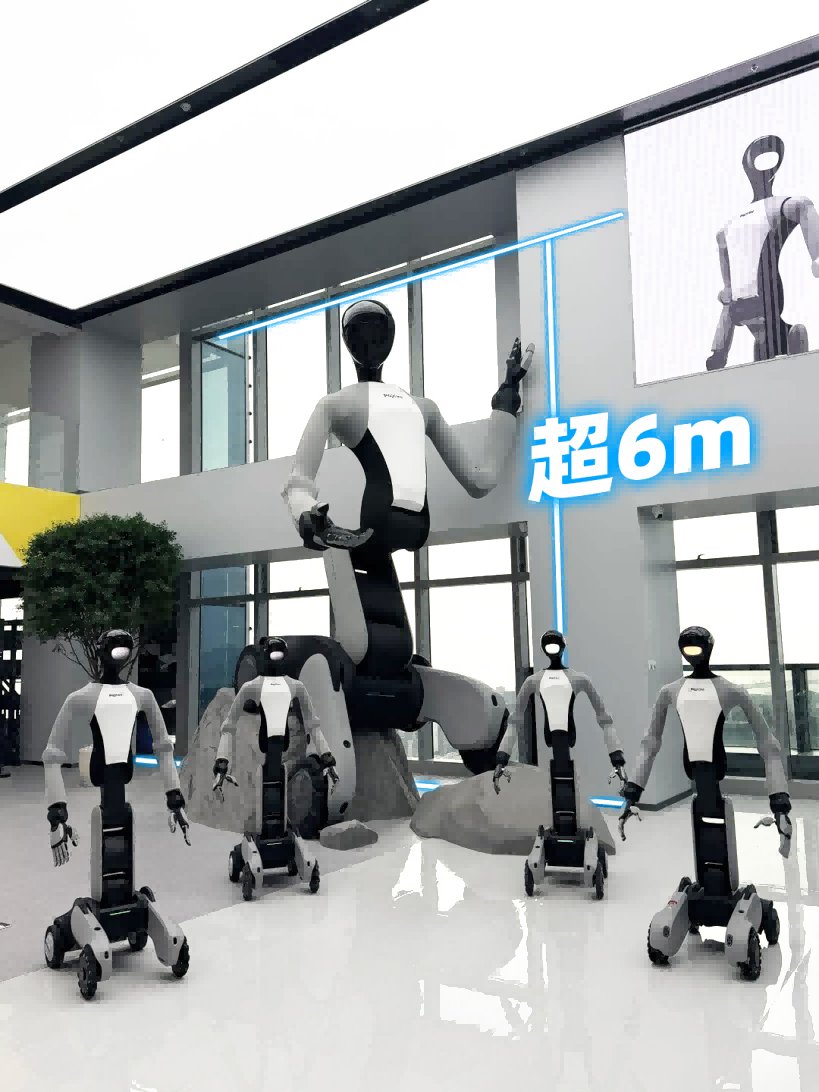
Original report: OFweek Robotics.
Translated and adapted from OFweek Robotics (robot.ofweek.com).