Shutu Technology has closed a Pre-A round of nearly RMB 100 million, led jointly by CDH Investments’ BaiFu arm and the Kunpeng Fund, a national big-data vehicle, with Guangzhou Industrial Investment and Yihe Capital joining and existing backer Trend Investment following on. It is the company’s third financing in one month.
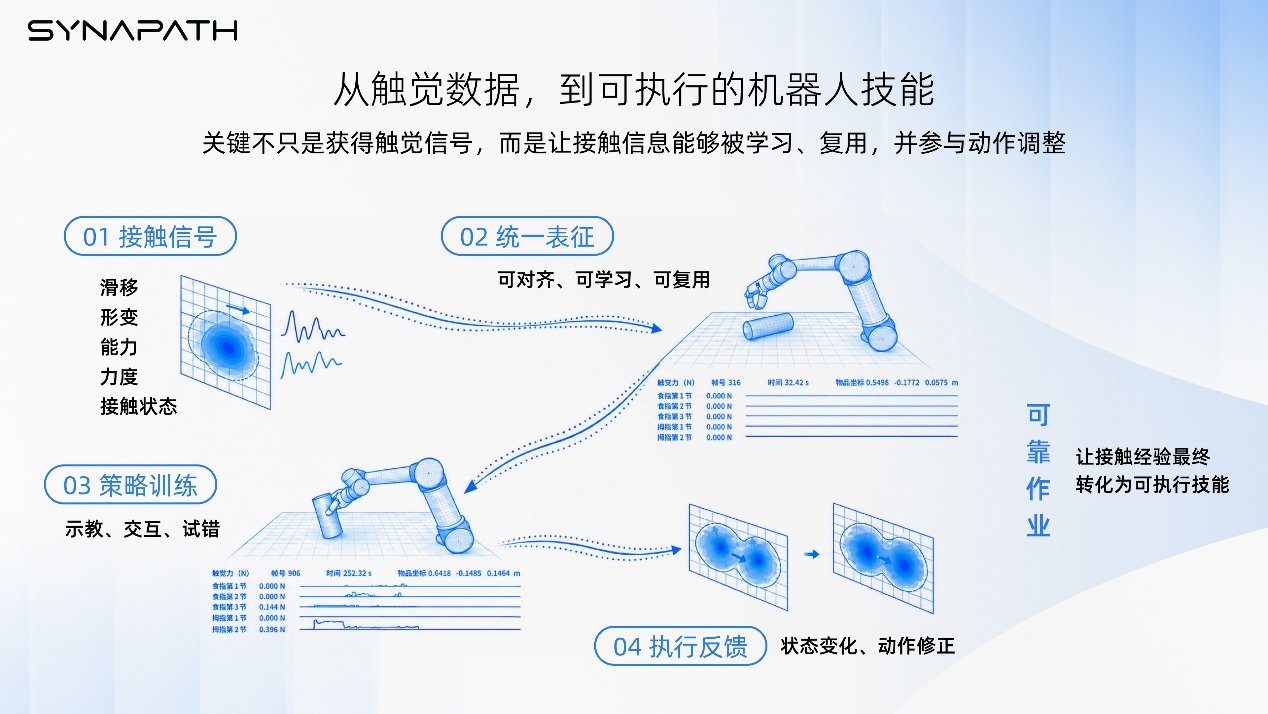
Beyond its existing video-upscaling data product, the round funds research and validation of tactile-data representation and the iteration of its SynaTac tactile product line, accelerating a push into contact-policy training and on-device deployment.
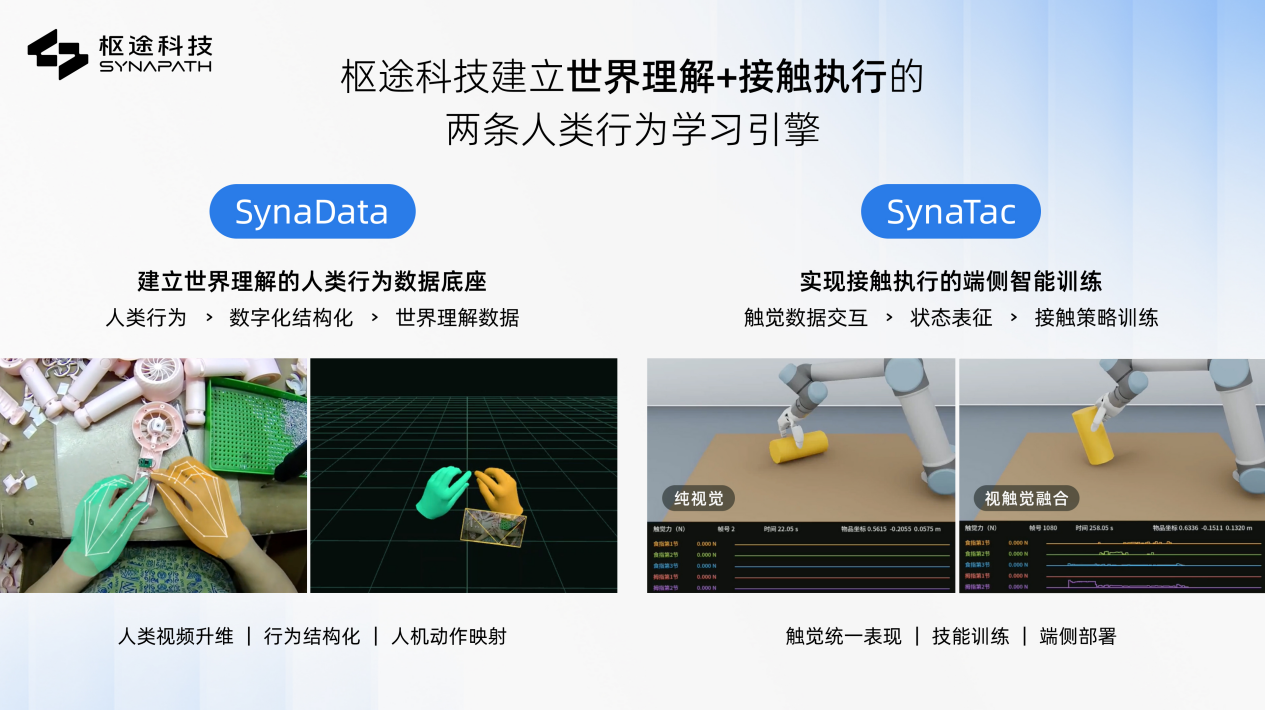
Shutu is extending from world understanding to contact execution through two engines. SynaData turns human action videos into structured training data covering motion trajectories, object poses and contact, and already serves more than 60 per cent of the RMB 10 billion-valuation embodied unicorns. SynaTac builds a unified representation of tactile data for contact-policy training on dexterous hands.
The chief technology officer, Wei Mu, was previously vice president of research at Covariant AI and its China software lead. The core team was built from Covariant’s algorithmic group, a group that has taken embodied algorithms from demo to product to stable field operation.
Shutu’s view is that the real gap to deployment is weak world understanding in the brain and unstable contact execution in the cerebellum. Massive human-behaviour video helps a robot know what to do, while tactile representation is what lets it do the job well, judging slip, deformation and resistance and adjusting force on the fly. Adding more sensors is not the same as acquiring contact ability.
The company argues its position is the physical-AI infrastructure layer, supplying common solutions for tactile-data processing, policy training and device adaptation so that the wider chain avoids repeated investment in new hardware and new tasks.
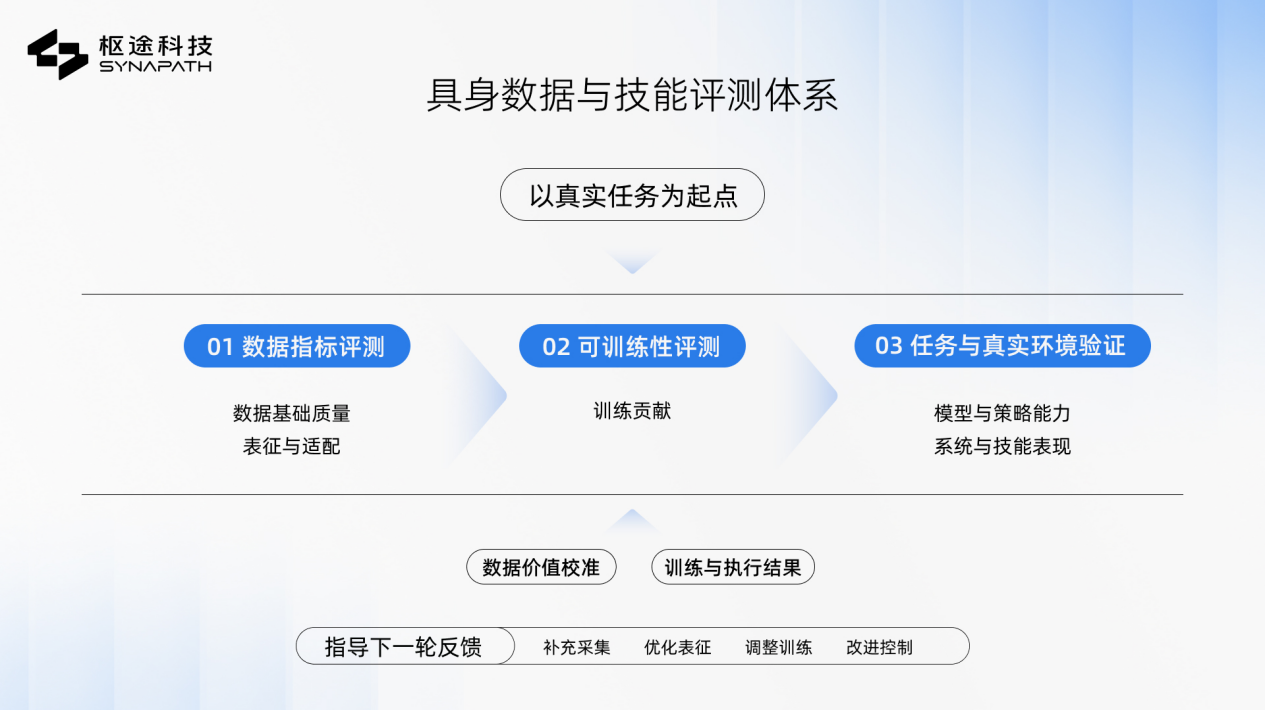
It has also published, for the first time, an embodied data-and-skill benchmark that links data supply, model training and real-robot execution across three stages: data-metric evaluation, trainability evaluation, and task and real-environment validation, feeding results back into production and model iteration.
Editor’s note: This is an adapted translation of the original LeiPhone report. It has been trimmed and restructured for readability for an international business audience. The full original (in Chinese) is at https://www.leiphone.com/category/robot/zVCVfjhnzD1S34Pm.html.