On 28 September in Yichang, Hubei, the launch of a domestically architected embodied robot revealed the world’s first embodied intelligence robot built on a fully home-grown electronic architecture, from Dongtu Science and Technology.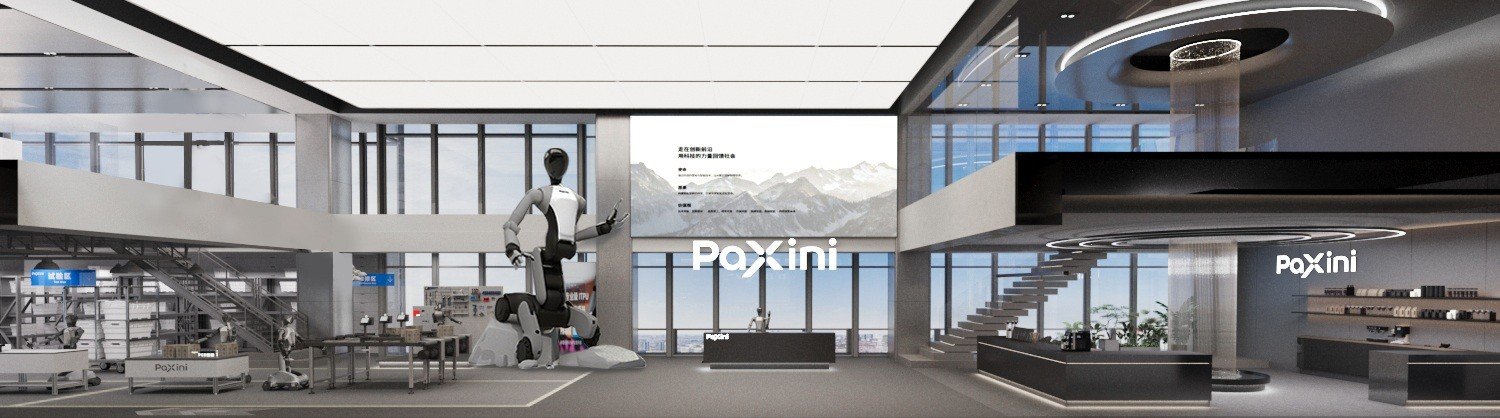
The electronic architecture is the intelligent nervous system that sets a robot’s performance ceiling, covering the operating system, network, tool software and AI compute chip. Dongtu’s design rests on deterministic computing and deterministic networking, integrating four technologies: the Intewell industrial operating system with international functional-safety certification, the AUTBUS deterministic bus based on China-led TSN technology and ratified as an IEC international standard, the MaVIEW physical-AI actuator software, and a domestic AI processor.
Against traditional foreign stacks such as Linux or ROS and CAN or EtherCAT, the domestic architecture isolates control from AI inference on one deterministic base, aligns vision and control at the millisecond level and motion control at the microsecond level, and rebuilds the robot’s endogenous security.
Testers from a national industrial information-security centre subjected the robots to joint destruction, cyberattacks and virus injection. Traditional electronic-architecture robots failed with line breaks, instant shutdowns and loss of control, while the Dongtu robot passed the harsh security tests and kept running, showing real-time control, fast response, fault isolation and attack resistance.
Dongtu began the underlying research in 2016. Intewell carries a national robot operating-system programme, AUTBUS became the world’s first two-wire broadband industrial bus based on TSN under China’s leadership, and MaVIEW shared the World Artificial Intelligence Conference technology award with Siemens MindSphere in 2020.
The architecture’s direction closely matches the physical-AI concept recently advanced by MIT, pushing intelligence from model output toward deterministic physical action. From single-component breakthroughs to software-hardware fusion to a full industry-chain ecosystem, China’s robot underlying technology has taken a qualitative leap, with alliances formed in 2025 and 2026 alongside the Shenzhen Robotics Association, the Beijing Humanoid Robot Innovation Centre, UBTECH, Tsinghua, AgiBot, LimX Dynamics and Moore Threads.
Editor’s note: This is an adapted translation of the original OFweek Robotics report. It has been trimmed and restructured for readability for an international business audience. The full original (in Chinese) is at https://robot.ofweek.com/2026-09/ART-898890-8220-30705461.html.