China’s dexterous hand industry shipped roughly 20,000 units last year. On Liu Xin’s account, the great majority of them ended up doing something other than work. They were fitted to humanoids for a few performances, then put away.
Liu is founder of Boya Intelligence, a hand company set up in August 2024. He spent most of a decade at Alibaba, latterly as technical director of the operating system division and product lead at Zebra Automotive, then moved to NIO to run product for the Ledao brand. The hand business, he argues, has not yet decided who its customer is.
Two products, no market
The category is split cleanly and uselessly. At one end sit low-degree-of-freedom hands that cost a few thousand renminbi, survive rough handling and can manage a wave. At the other sit high-DOF hands priced above RMB 100,000, bought almost entirely by universities and institutes.
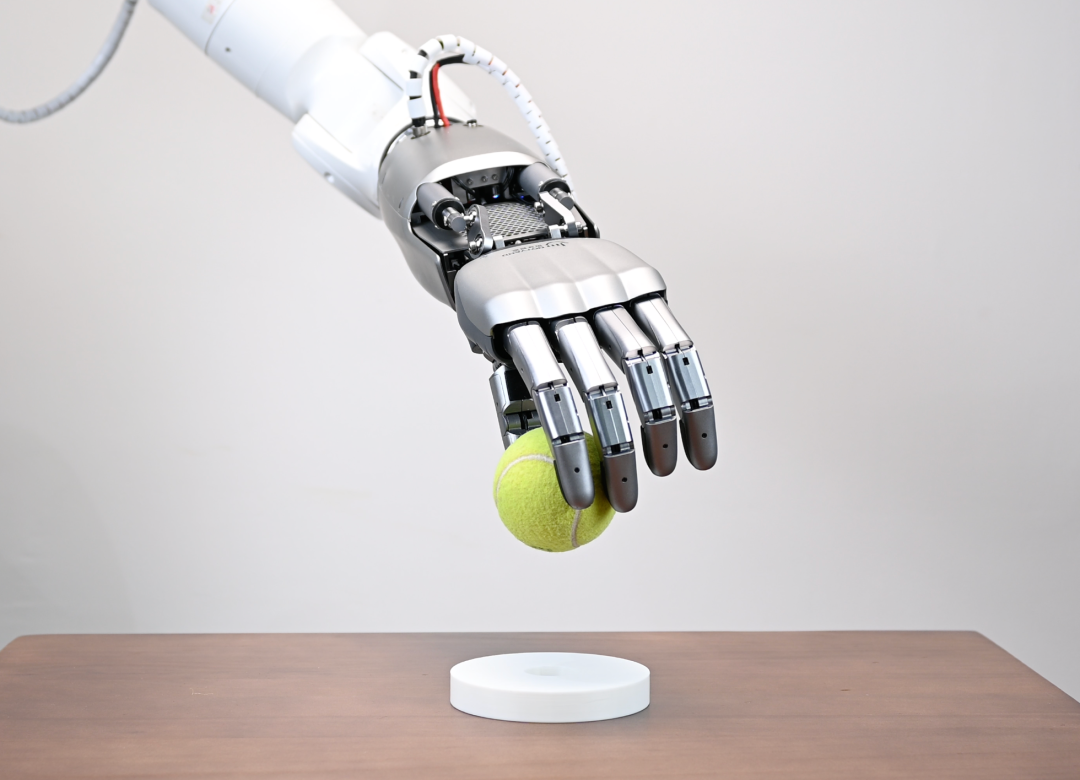
The expensive end is not merely unused. Liu says the best of the current high-DOF products last one to two weeks in continuous service, and at the outside two months. Buyers respond rationally, which is to leave them in the box.
What actually stops deployment is not the purchase order. Liu’s example is an arm bought for RMB 200,000 that needs a further RMB 1,000,000 of integration before it performs a task. The hand inherits the same multiplier, and a disposable component at the end of an expensive chain is a design failure, not a cost problem.
Removing a joint to add capability
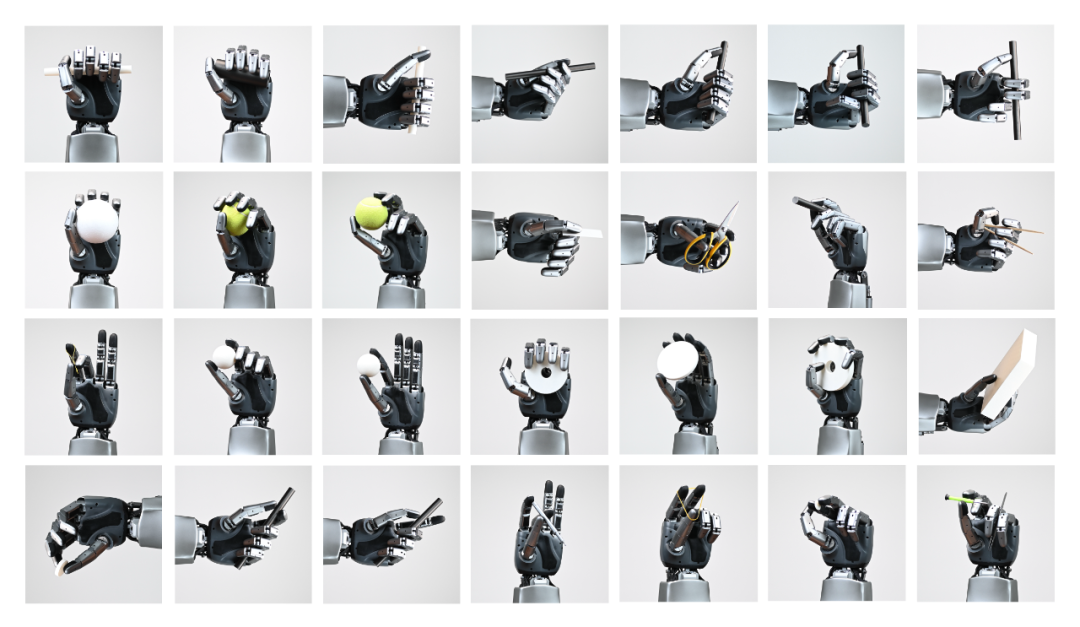
Boya’s first product, the Gaoshan S1, carries 22 degrees of freedom in a hybrid arrangement, rope drive as the primary transmission with gear direct drive and lead-screw linkage doing the supporting work. The company describes the rope and lead-screw parallel wrist as a first.
Alongside the hardware sits a small cerebellum model, a library of more than 30 standard motions that an upper-level policy can call and correct in real time. The split is deliberate. The lower layer makes motion repeatable, the upper layer decides which motion a scene requires.
Liu draws the design lineage from cars and phones rather than from robotics. His claim is that the industry is earlier in its product cycle than the Li ONE was, because the Li ONE at least knew what job it was doing. A hand, today, does not.
Three bets against the consensus
The first is that models hit their capability inflection earlier than bodies do. If that is right, the constraint on manipulation stops being intelligence and becomes the mechanism, which inverts most current investment priorities.
The second is that rope drive outlasts direct drive. Rigid transmissions are more precise per joint today, and rope systems have historically suffered from stretch and wear. Liu’s argument is that the reliability curve crosses, and that the crossing is close.
The third concerns the specification itself. Precision on a hand should be measured by the smallest increment it can control, not by repeat positioning accuracy, because repeat positioning describes a machine returning to a point it already knows.
A third market, sitting between the toy and the laboratory, is the whole thesis. It requires academic-grade manipulation at a commercial price, and nobody is shipping it yet.
Editor’s note: This is an adapted translation of the original Leiphone report. It has been trimmed and restructured for readability for an international business audience. The full original (in Chinese) is at https://www.leiphone.com/category/robot/EnKFLg1RRmN9SaHJ.html.