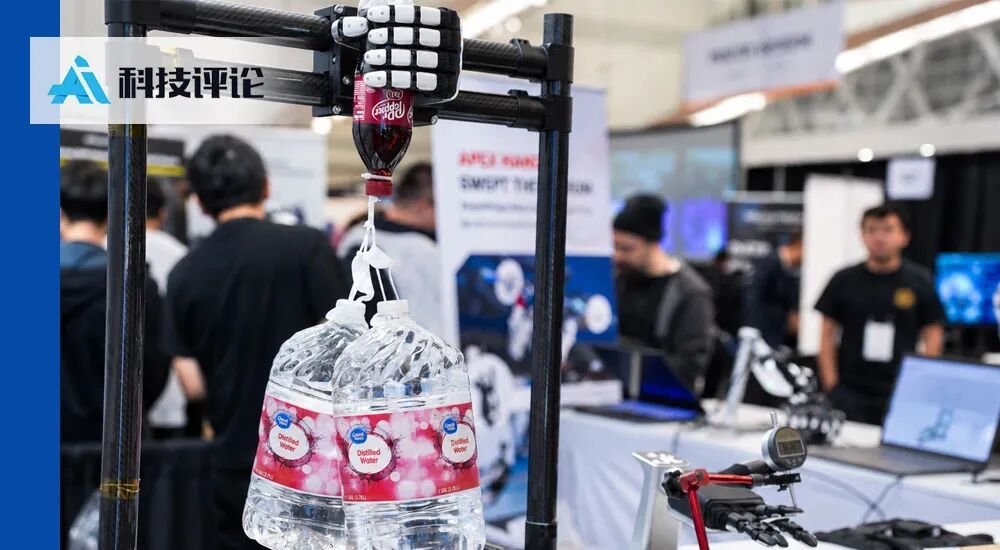
This year’s IROS looked different in a specific way. The demonstrations were harder. Hands threaded beads, seated USB plugs, heat-branded canvas bags, spun pens and balls between their fingers, mixed drinks and took a pulse. Complex contact, long-horizon manipulation and deformable objects have moved from research video to conference floor.
What changed underneath the spectacle is that vendors started removing things.
Fewer joints, better hands
For several years the competition ran on degrees of freedom, and 22 became a marketing number. The extra joint sat at the hypothenar, the muscle group below the little finger, and added local palm mobility. This year a number of manufacturers dropped it, having concluded that the performance gain on real tasks does not cover the structural cost.
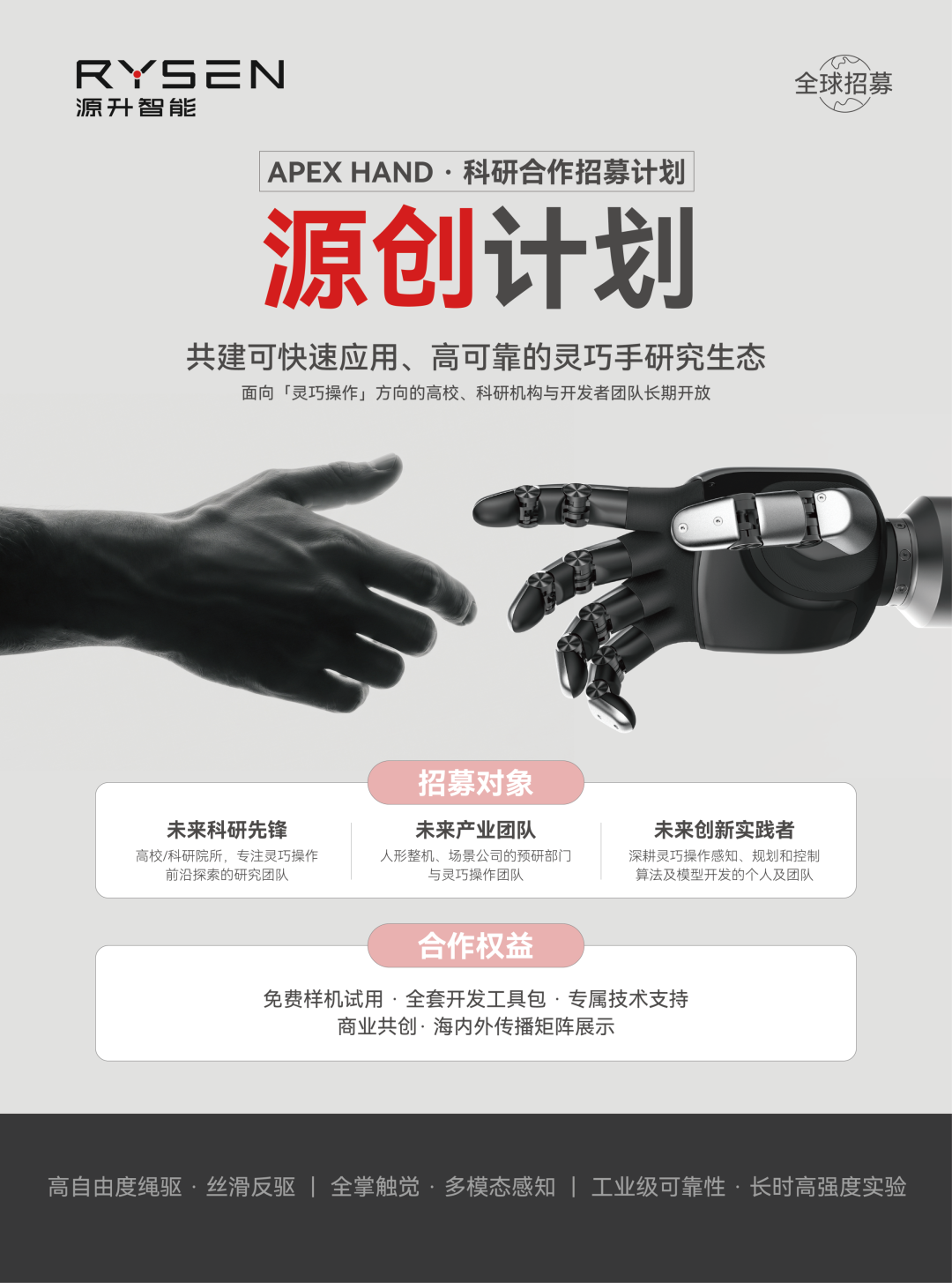
Origin Rise’s Apex Hand took a different route to the same conclusion. Twenty-one degrees of freedom, distributed five in the thumb and four across each of the other fingers, following human anatomy rather than maximising a count. The company says it is one of very few production five-finger hands to pass the Kapandji opposition test in full, a clinical scoring method for thumb-to-finger contact.
The other specification the company pushes is minimum grasp diameter, which it argues matters more than overall hand size. A smaller minimum diameter widens the range of objects a hand can hold, and it is the parameter customers misread when they see a hand that looks slightly larger than a human one.
Three judgements from the founder
Yang Sicheng’s first claim is that the axis of competition has moved from peak specification to system capability. The individual numbers now have to balance, because a hand that is excellent on one axis and weak on another fails at the task level.
The second is that endurance is the real dividing line. Heat dissipation, structural reliability, fatigue life and maintainability are invisible in a launch video and decisive in a maintenance budget. A hand that fails at month two costs more than one that fails at month one, because the customer has already built a process around it.
The third is the one vendors least want to hear. Delivering hardware is not delivering manipulation. Without a workable route to high-quality contact data, the customer owns an object that cannot be taught, and capability never converts into output.

The product logic that follows is inverted from the usual one. Instead of building the highest-capability hand and searching for a market, designers start from the task and work backwards to the minimum viable specification that survives a shift.
That is a quieter change than a better demo, and it is the one that decides which of these companies has customers in 2028.
Editor’s note: This is an adapted translation of the original Leiphone report. It has been trimmed and restructured for readability for an international business audience. The full original (in Chinese) is at https://www.leiphone.com/category/robot/jv4zJUmQr2wkoN0i.html.