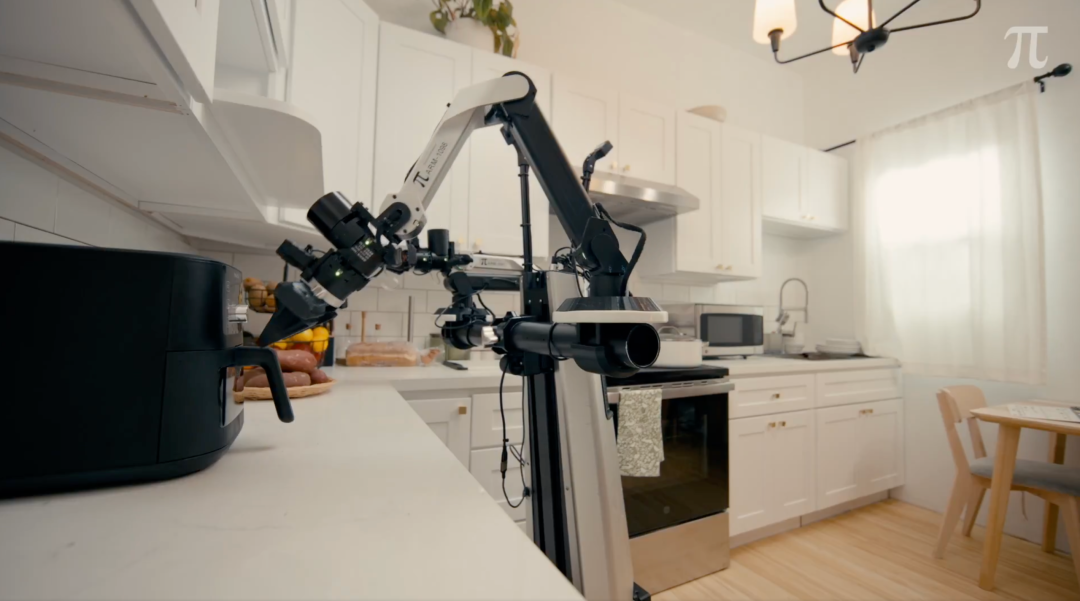
Physical Intelligence is raising again, and the number it wants has no precedent in robotics.
Bloomberg reported that the two-year-old San Francisco company is in talks to raise at least USD 1 billion at a valuation of about USD 20 billion, with existing backers Avenir and Lux Capital expected to lead the round. Physical Intelligence has no publicly disclosed revenue.
That combination is not a rounding error. It is a different asset class to the one Chinese robot companies are being priced against this week.
Two pricing systems, one industry
American capital is underwriting the robot brain as the entry point to physical AI. Chinese capital is underwriting robots as manufacturing projects that must show a production line, an order book and a delivery date.
The consequences show up in what founders are asked. Chinese investors now open with three questions: who is your customer, what is the repeat rate, how many hours has the machine run without a human standing next to it. Kai Capital investment director Gao Luning put it plainly: valuations will move from demos to orders and mass production, and companies that cannot produce orders will face a survival problem.
Physical Intelligence co-founder Lachy Groom told TechCrunch in January that he does not answer commercialisation questions from investors. He also conceded that investors tolerating this is unusual.
China’s money did not leave. It concentrated.
Chinese embodied AI funding cooled last month, but the cooling is not an exit. IT Juzi data shows October deal count fell to 33 from 60 in September, while total value slipped only from RMB 11.028 billion to RMB 10.105 billion. Across the first half of 2026, 322 deals raised RMB 93.5 billion, and the top 20 companies took about RMB 55 billion, or 59 per cent of the total.
Cheques are still being written. They are being written to fewer names, later in the lifecycle, and with a heavier share of state platforms and industrial capital whose mandate is production capacity rather than platform economics.
That has a mechanical effect on strategy. When the main investor wants a line and an order, a brain company adds a body, takes integration work, and staffs up on customer acceptance and after-sales. Revenue arrives sooner. The distance to a general platform grows.
The test nobody has passed
Ant Group’s embodied AI unit is the closest thing to a counter-example. Its LingBot-VLA 2.0 already adapts to more than 20 robot configurations from 17 vendors, including Leju, AgiBot, Unitree and Galaxea, and it runs sorting tasks inside a real pharmacy chain.
Then chief executive Zhu Xing names the real problem: moving from one store to many. Shelving layouts, product positions and task details differ between pharmacies, so replication still requires new data, new post-training and new tuning. The projects work. The platform does not yet exist.
Physical Intelligence has the same debt. Its API is still in beta, with no public pricing and no disclosed revenue. Weave, a laundry-folding robot maker, added its own washing data to PI’s pre-training and cut grasp failures by 42 per cent and human intervention by 50 per cent. That is a real data flywheel. It is also one customer.
Scale comparables already exist on the American side: Figure at USD 39 billion, Skild AI above USD 14 billion with more than USD 100 million of annual recurring revenue. Chinese backers counter that the country has not invested enough at all, a line Meituan Dragon Ball partner Wang Xinyu has made publicly.
The unresolved question is not which system is smarter. It is whether a brain trained on one body still works when the shelf changes, the goods change and the arm belongs to somebody else. Nobody on either side has published that number.
Editor’s note: This is an adapted translation of the original OFweek report. It has been trimmed and restructured for readability for an international business audience. The full original (in Chinese) is at https://robot.ofweek.com/2026-11/ART-8321206-12003-30709942.html.