Meta built a working humanoid in about three months, and it did not build it in California.
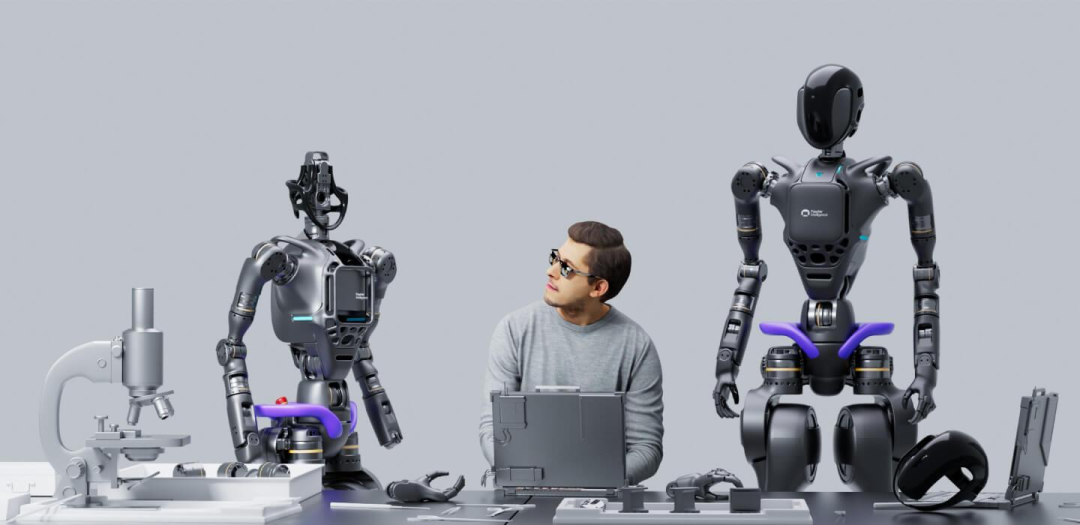
The prototype, internally called Max, was developed with Shanghai robot maker Fourier Intelligence, according to The Information. It stands roughly 1.5 metres, weighs 48 kilograms, runs on Nvidia’s Jetson Thor, carries five-fingered hands and wears a display face built to mimic expression. Meta also wants it to track voices and gestures, and to hold eye contact.
Android, without the standard
Meta’s plan was set out by chief technology officer Andrew Bosworth in an internal memo in February 2025: build a consumer humanoid, and also build the AI, sensors and software that other robot makers can license. The ambition is the Android of robotics, except Android inherited a hardware standard and robots did not. Joints, sensors, hands and control systems differ by vendor, so the same model on a different body is an open question.
Before selling a platform, Meta has to prove it can drive one machine. That is what Max is for. Li-Chen Miller, Meta’s vice president for robot products, spent close to two months at the Shanghai factory with Fourier engineers.
The important detail is that Max is not an off-the-shelf GR unit with Meta software bolted on. The two sides reworked body proportions, head structure, camera placement and hand design, drawing on three generations of Fourier hardware. Meta has been hiring supplier development engineers in Shanghai and product design and technical programme staff in Shenzhen, covering prototyping, manufacturing and volume readiness.
Fourier’s side of the trade
For founder Gu Jie, the collaboration is consistent with a position he has held since 2024: build the body, partner for the frontier algorithms. Fourier started in rehabilitation robotics, moved through GR-1 and GR-2, and now sells GR-3 as an interaction-focused companion machine. Meta bought robotics AI startup Assured Robot Intelligence in May 2026 and has since framed the humanoid as the physical embodiment of its Muse agent.
The asymmetry is the point. Meta gets a body it did not have to learn to manufacture. Fourier gets a Western platform partner and a reference that no domestic competitor can match, at the cost of being the contract manufacturer in somebody else’s platform story.
What it does not prove
Max demonstrates that a well-funded American lab can compress humanoid prototyping into a quarter when it buys the hardware expertise instead of rebuilding it. It does not demonstrate that Meta’s software ports across bodies. That test needs a second robot, from a second vendor, with different kinematics.
It also resets where the supply chain sits. If the Android of robotics is assembled in Shanghai and tuned in Shenzhen, the tariff and export-control debate arrives at the humanoid category faster than most forecasts assumed.
Editor’s note: This is an adapted translation of the original OFweek report. It has been trimmed and restructured for readability for an international business audience. The full original (in Chinese) is at https://robot.ofweek.com/2026-11/ART-898890-12003-30710048.html.