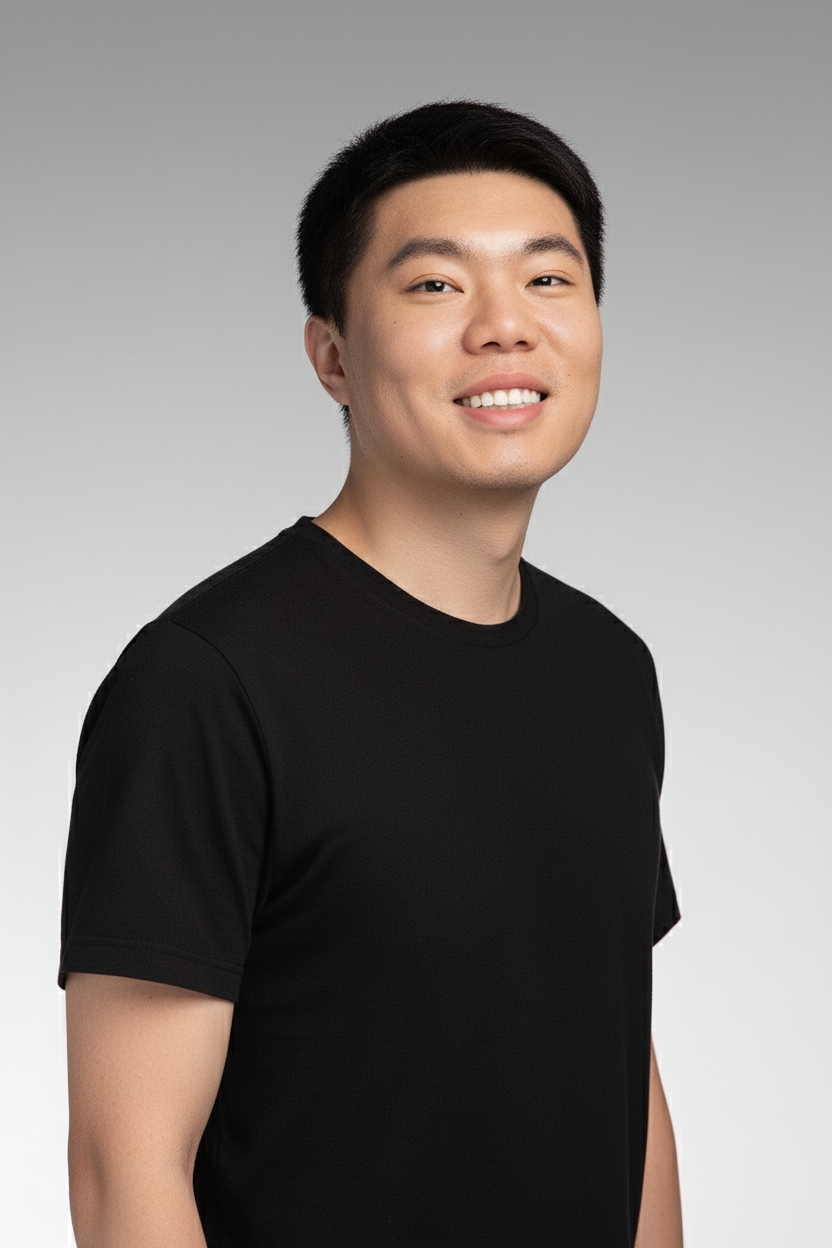
Looking back to late 2024, when he entered embodied intelligence with consumer-robot experience, LeShare founder and chief executive Guo Renjie joked he may not have realised how hard the industry would be.
Guo was born in 1997, entered the Xi’an Jiaotong University gifted-youth class at 15 to study energy and power engineering, and earned a master’s at the London School of Economics. He joined Dreame in 2021 and became its China executive president in under four years, managing a team of more than 1,500, and was a key figure in Dreame’s rise in robot vacuums.
Deep familiarity with home environments and user needs meant the first generation product came quickly. But that confidence then went through a long calibration. Around May 2025, Guo realised a wrong assumption: most robot-vacuum technology is mature, yet many embodied-intelligence problems have no precedent. The gap between “imagined” and “built,” and again between “built” and “actually useful,” is far wider than he thought.
In the first half of this year Guo all but vanished from social media while LeShare went quiet. He says it was a valuable yet painful period: recruiting top scientists, rebuilding his own technical judgement, and assembling a proper R&D team across six directions, body structure, joint modules, lightweight arms, VLA, general embodied models and consciousness-bionic models.
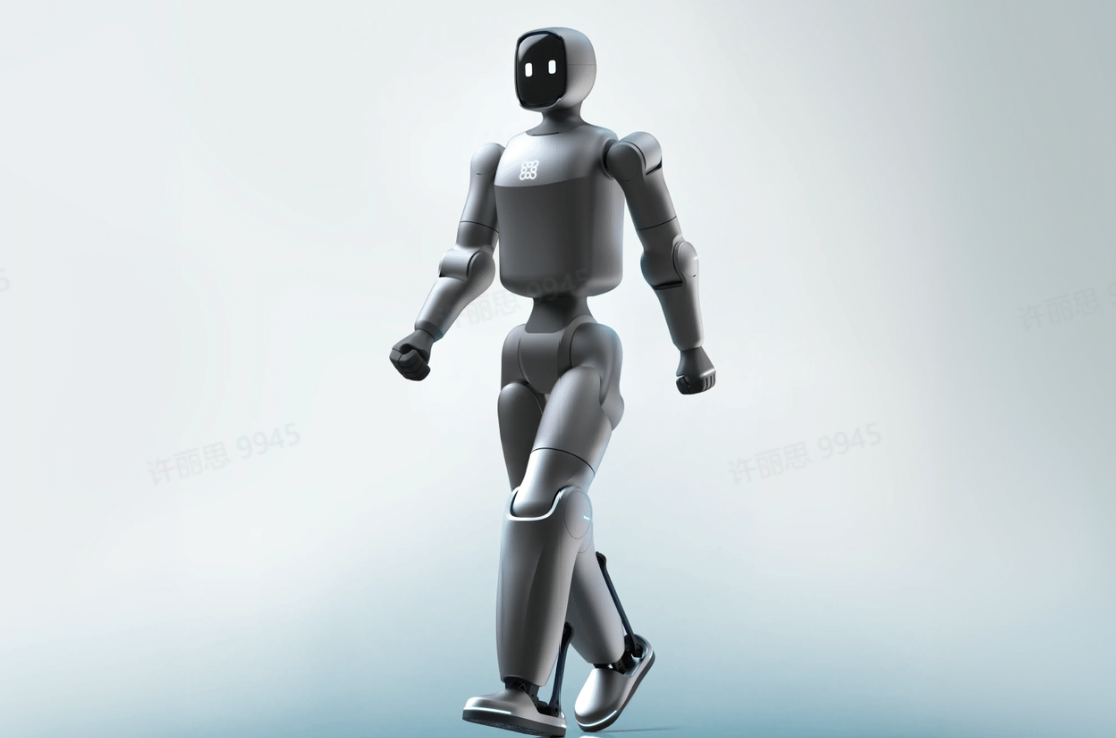
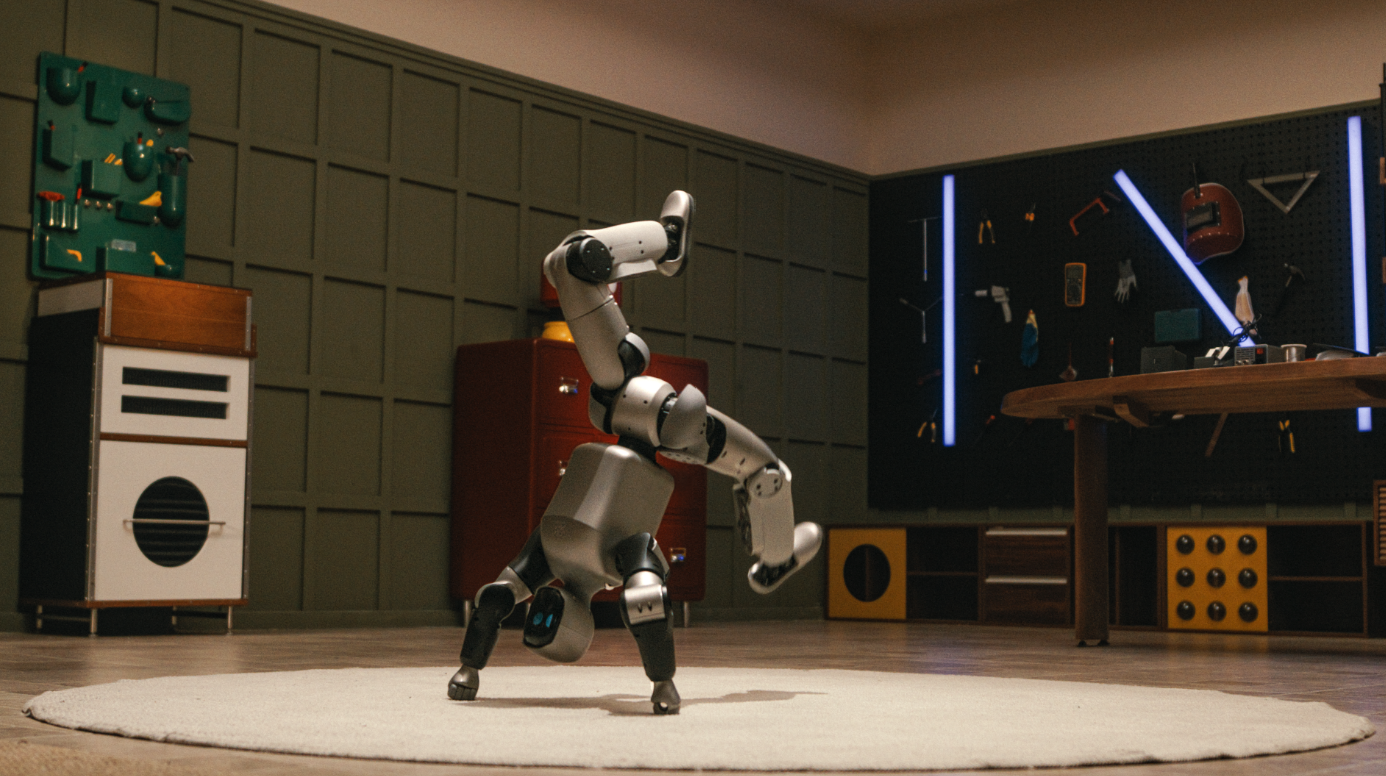
In July, LeShare closed a RMB 500 million Pre-A round led exclusively by Ant Group. It had already lined up small humanoid, tracked, home-collaborative and full-size humanoid product lines, including M1, W1, N1 and Jupiter. The newly released high-performance Bridge stands 88 centimetres, weighs under 13 kilograms, presells at RMB 8,888, and can backflip, be teleoperated, capture motion and attach modules for object manipulation and navigation.
One productisation logic, repeated
Guo says every LeShare form follows the same logic: co-create with geeks and developers to probe hardware limits, then take the functions those limits enable to users to test which needs drive real purchases, then productise the validated needs. The first-generation M1 has completed this loop, validating three scenarios, elderly-care companionship, pet-companion recording and child-companion education, and begun delivery. Bridge just entered the geek co-creation stage, with hundreds of units going to developers.
OpenBridge, a fully open-source ecosystem for embodied-AI developers, lets ordinary users install skills on the robot like apps on a phone. Guo says LeShare will release its own model this year, exploring a path that lets robots truly generalise and truly work.
From toy to tool
LeShare’s self-developed joint module is about 40 millimetres in diameter, about 210 grams, yet delivers 12 newton-metres of peak torque, which the company calls the world’s lightest and smallest high-torque joint module. Guo argues most modules on the market are built for industrial and business use and weigh over 15 kilograms; to enter homes the robot must stay under 10 kilograms, so the module had to be built in-house.
On whether the industry overstates module specs, Guo says after self-developing he saw the gap directly. LeShare labels its peak torque at 10 newton-metres based on real performance, though tests showed it could be written as 15; it still states only 10 to 12 newton-metres, the true peak under normal conditions. Knowing the real boundary lets it match body weight to motor capability.
Why a separate brand
Guo compares LeShare to ByteDance and YuanDian to Douyin. He wants LeShare to become a group; embodied intelligence is a long enough track with many places to lay eggs, and each brand should carry its own personality. YuanDian stands for pioneer and warmth, the mirror of humanity that progresses with people. LeShare may run a multi-brand model, with YuanDian carrying home and consumer embodied intelligence.
The long game
Guo defines product-market fit as at least 10,000 units shipped, ideally 20,000 to 30,000. He is in no rush to converge the product line, because the industry has not consolidated. Covering more forms means whichever succeeds, the company can follow fast. On the WALL-E (Wali) IP licensed from Disney, the home version will appear in October at about 60 to 70 centimetres tall and 6 to 7 kilograms.
Editor’s note: This is an adapted translation of the original Zhidx report. It has been trimmed and restructured for readability for an international business audience. The full original (in Chinese) is at https://www.zhidx.com/p/589669.html.