BYD’s ultra-luxury sedan has a name. Yangwang, the group’s premium division, will call the car Dingyao, replacing the internal code HU, and the positioning is unambiguous.
The model has been in development for three years, according to Hu Xiaoqing, general manager of Yangwang’s sales division, and continues the family’s design language. It is the division’s first attempt at a full-size executive sedan rather than a large SUV or a supercar.
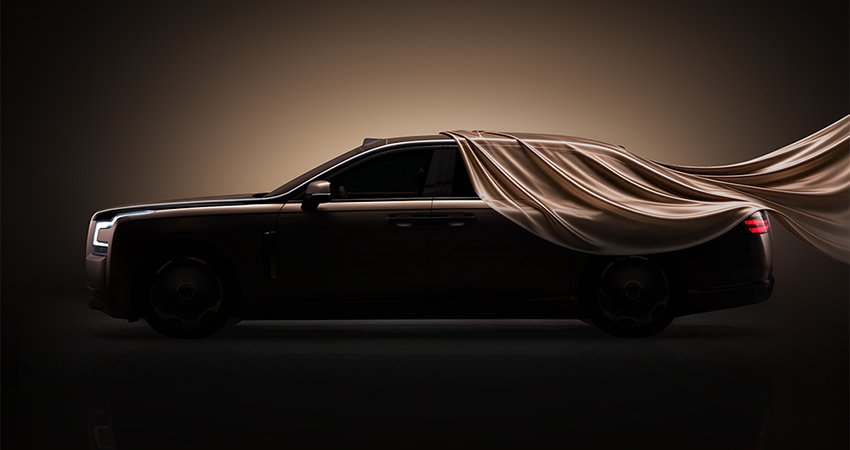
The proportions are the statement
Spy photographs show a square-shouldered body with a short front overhang and a long rear overhang, a long rear door and opposite-opening coach doors. A lidar sits above the windscreen. The front end carries a large grille and split lighting, closer to the U8’s upright face than to the lower, sleeker U7 sedan.
Chinese media report a length of about 5.5 metres, which places it in the same bracket as the Maybach S-Class, and a price that may exceed RMB 2 million. Yangwang has not published dimensions, pricing or a launch date.
Equipment is expected to include BYD’s flash charging, and observers expect the quad-motor Yi Si Fang drive system and DiSus body control. Earlier photographs showed the car at a BYD flash charging site. Reports have also suggested it could be among the first models to carry BYD’s solid-state battery, though that is unconfirmed.
BYD’s published plan puts solid-state demonstration fleet applications around 2027, with large-scale use after 2030. Any car launched ahead of that window will almost certainly use a conventional lithium-ion pack, whatever the speculation says.
What Yangwang has already built
The division currently sells the U7, U8, U8L and U9, covering luxury sedan, luxury SUV and supercar segments. The 2026 U8L Dingcang edition launched in August at RMB 1.458 million with a four-seat executive layout.
That price ceiling is the relevant reference point. Dingyao is expected to clear RMB 2 million, roughly 40 per cent above the most expensive Yangwang on sale today, and is reported to be planned for a debut in the United Arab Emirates.
The harder problem
Adding a flagship sedan completes the line-up. It does not complete the brand. Above RMB 2 million, buyers are not comparing specifications. They are buying admission to a category where provenance, dealer experience and resale behaviour carry more weight than acceleration figures, and where annual volumes are measured in hundreds rather than thousands.
Chinese manufacturers have proven they can build a car at this level. The unresolved question is whether the market will pay Western flagship money for a Chinese badge, and how long that permission takes to earn.
Dingyao will be read as the test of that question. Its specification sheet is likely to be competitive. Its pricing decision is the one that matters, and Yangwang has not made it yet.
Editor’s note: This is an adapted translation of the original Chedongxi report. It has been trimmed and restructured for readability for an international business audience. The full original (in Chinese) is at https://chedongxi.com/p/378867.html.