At the start of this year, a number of Chinese embodied intelligence companies promised to collect data at the million-unit scale. Most of a year later, several claim to have done it. The models have not visibly improved in proportion, and the reason sits in the segment between collection and training.
Yang Shiqi, founder and chief executive of the robot foundation model company Xingyuan Intelligence, describes the failure mode in operational terms. Data arrives, and no one can say in advance what a given batch will produce.
Five stages, five leaks
A raw recording has to pass through five processes before it becomes training material. Selection removes blurred frames, interrupted motions and anomalous trajectories. Annotation adds task, object state, action phase and language instruction. Retargeting maps a human demonstration or another robot’s motion onto the target embodiment. Validation checks the result against rules, simulation or a real machine. Feedback then adjusts the earlier stages based on how training and deployment perform.

Almost every stage can be automated. Almost none of them has a standard. Filtering has no agreed granularity, so a clean video of a complete motion can still be worthless to a policy, and a retargeted trajectory that satisfies kinematic constraints can still be unexecutable in a real room.
The asymmetry matters. In language model training, a batch of dirty data produces a degradation that persists through the model’s life. Nothing suggests a robot policy is more forgiving, and the validation loop is slower because every check eventually needs hardware.
Four sources, four different bottlenecks
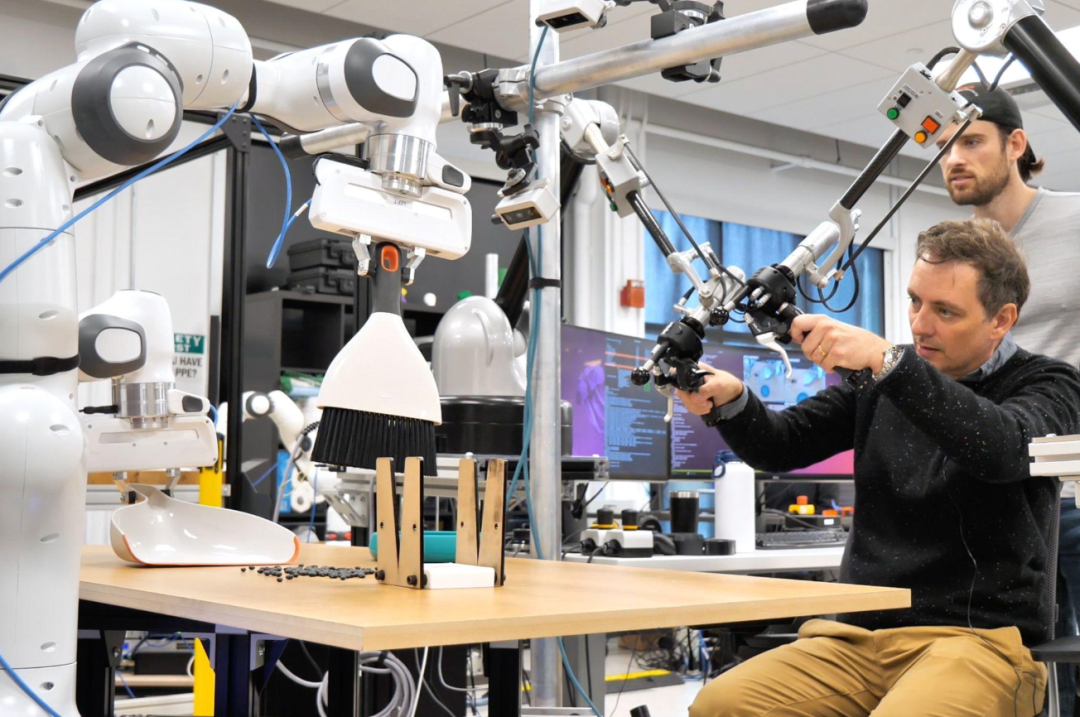
Teleoperation produces the best data and costs the most. Robot, operator, floor space and task all have to be paid for, and cross-embodiment transfer remains inconsistent between vendors.
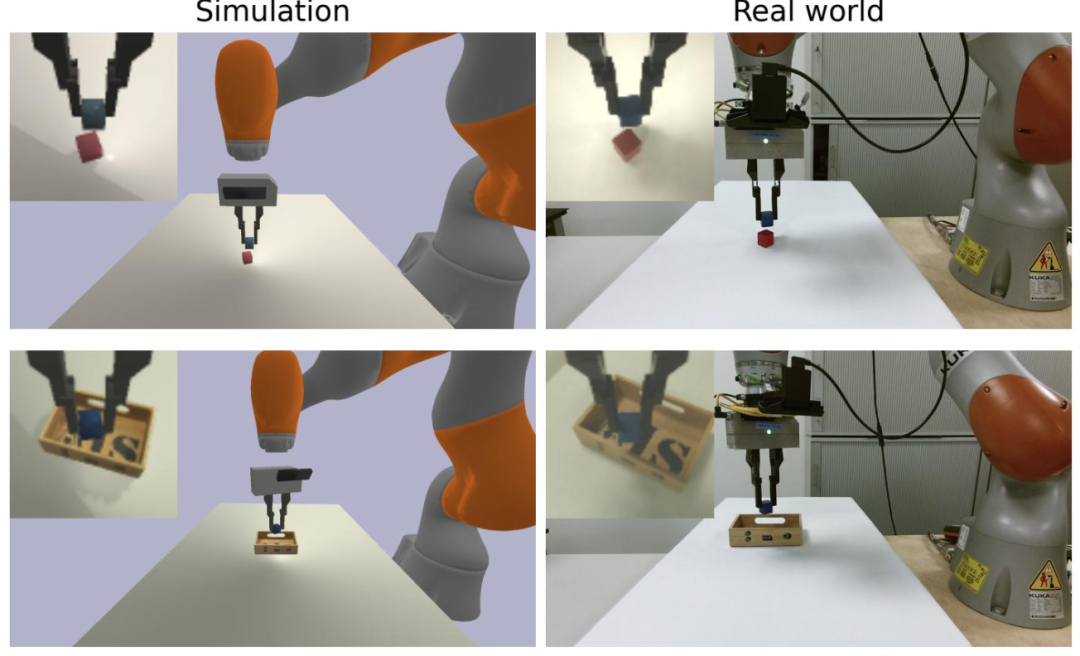
Simulation scales cheaply and misrepresents contact. Physics engines have not changed enough in years to model friction, deformation and contact position with the accuracy that assembly, grasping and screwing demand, which is precisely where the Sim2Real gap is widest.
UMI-style rigs record human operation through lightweight hardware and cut the cost per episode sharply. They remain project-driven, and the mapping from a specific capture device to a specific robot is another bespoke step.
First-person human video is the only source with genuine scale, since daily life already contains the motions, and head-mounted cameras can record them without organising a session. It also moves all the difficulty into the pipeline, because the video lacks joint state, force and often the end effector itself.
What disclosure hides
The industry reports hours collected. It rarely reports how many hours survived processing, how many were used, and whether the downstream task improved. Those three numbers can differ by an order of magnitude, and the first one is the only one that appears in a funding deck.
The structural problem is that collection, processing and training are usually run by different teams with different delivery standards. A collector is paid per hour. A trainer is judged on task success. Nobody is measured on the conversion rate between them.
Building that conversion rate, and proving it with deployment results rather than episode counts, is the harder problem now. Collecting more has stopped being the interesting one.
Editor’s note: This is an adapted translation of the original Leiphone report. It has been trimmed and restructured for readability for an international business audience. The full original (in Chinese) is at https://www.leiphone.com/category/robot/espiC5FlGhRbSj1b.html.