Lens Technology can now assemble a humanoid every nine minutes in Kunshan. Its net profit fell by half over the same nine months.
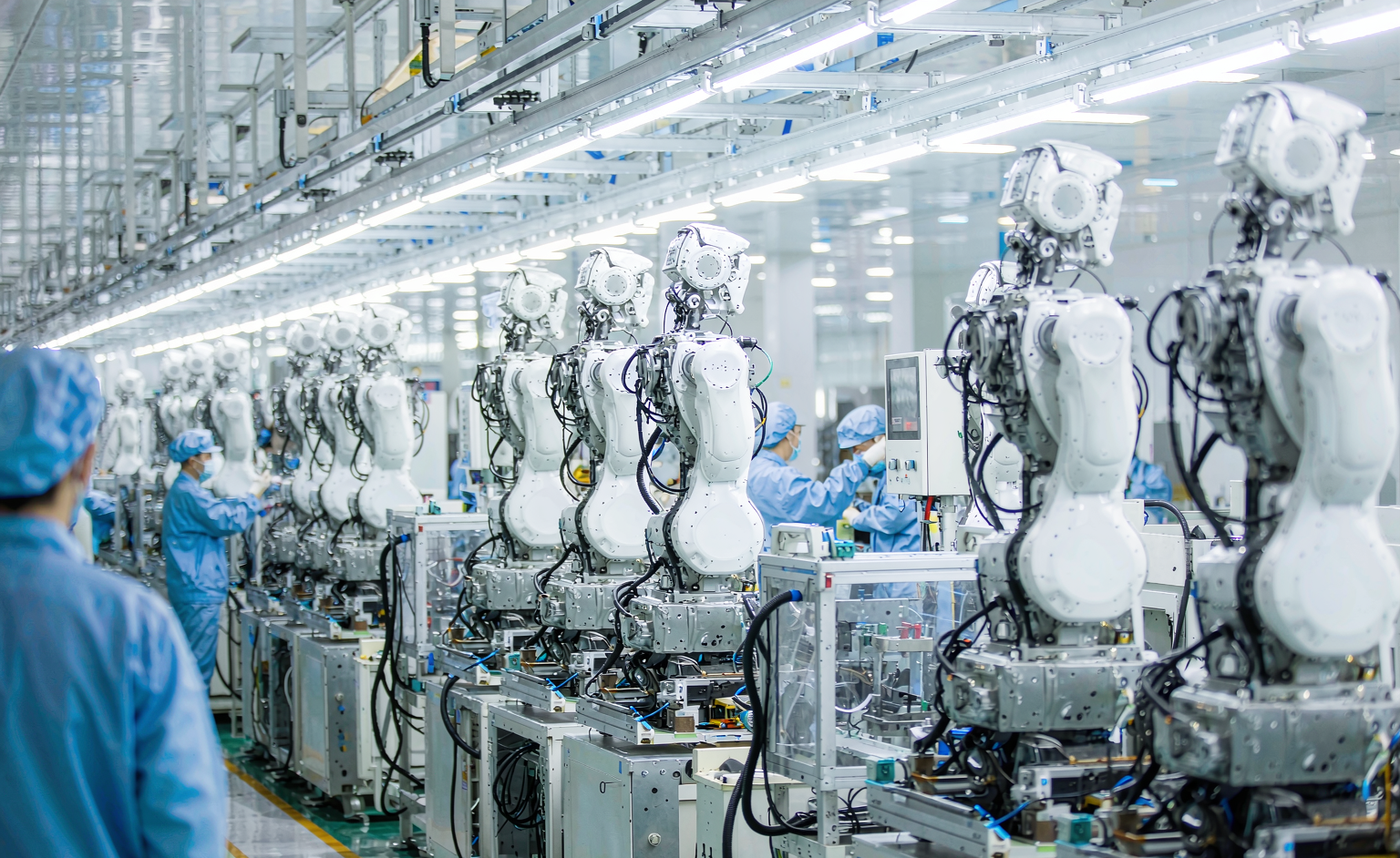
The Apple glass supplier told investors on 1 November that its Kunshan robot base reached 100 units a day, after moving into the site in late August and rolling the first unit off the line in late September. From next month it plans to guarantee capacity above 10,000 units a month for each of two customer programmes, the Q series and the T series.
Capacity is not an order book
The distinction matters. Ten thousand units a month is planned capacity, not contracted demand, and not shipments. Lens has disclosed no separate revenue, gross margin or profit figure for the robot business, so the unit economics behind the announcement remain invisible.
The customer is Swancor Qiyuan, a partner Lens is deepening beyond assembly. Having secured OEM delivery, the two sides are moving toward ODM and vertical integration of the supply chain. Lens has also worked with AgiBot since 2024 on curved display modules, dexterous hand modules and joint modules, using its purchasing scale to compress component costs.
Why the profit halved
Nine-month revenue came in at RMB 47.902 billion, down 10.74 per cent. Net profit attributable to shareholders was RMB 1.420 billion, down 50.06 per cent, and profit after non-recurring items fell 63.07 per cent to RMB 998 million. The third quarter alone: revenue of RMB 19.035 billion, down 8.05 per cent, and net profit of RMB 843 million, down 50.42 per cent.
Currency did much of the damage. Overseas business is settled in dollars, and the nine-month foreign exchange loss reached RMB 654 million against a RMB 115 million gain a year earlier, a swing of RMB 769 million. Consumer electronics demand, customer launch timing and rising period expenses added to it.
Operating cash flow was still positive at RMB 4.713 billion, down 19.35 per cent, which funds the new lines. Inventory rose 35.02 per cent from the start of the year and long-term borrowing increased.
The part that is genuinely strategic
Lens Intelligence, founded in 2016 to build automation equipment for the group, merged with Lens System Integration in 2025, combining hardware manufacturing, control, manufacturing systems and data. Kunshan now runs an MES layer that tracks process parameters and quality in real time, and the stated long-term goal with Swancor Qiyuan is robots building robots.
That goal is a plan, not a state of affairs. Humanoid assembly still requires precision fitting, flexible handling, joint testing and system commissioning, and automation has to be economic, not just capable.
The underrated asset is floor space. The group operates more than one million square metres of industrial, commercial, education and medical sites, and has collected over 10,000 hours of first-party robot data inside them. A contract manufacturer with real scenes can sell validation and data collection alongside assembly, which is a different business from stamping phone frames.
The test for the next four quarters is not how many units Kunshan can theoretically build. It is whether Lens can raise in-house component content, cut unit cost, and convert capacity into revenue that survives a consumer electronics downcycle.
Editor’s note: This is an adapted translation of the original OFweek report. It has been trimmed and restructured for readability for an international business audience. The full original (in Chinese) is at https://robot.ofweek.com/2026-11/ART-8321201-12003-30710065.html.