Three funding rounds closed on the same day in China, and none of the companies involved builds a robot.
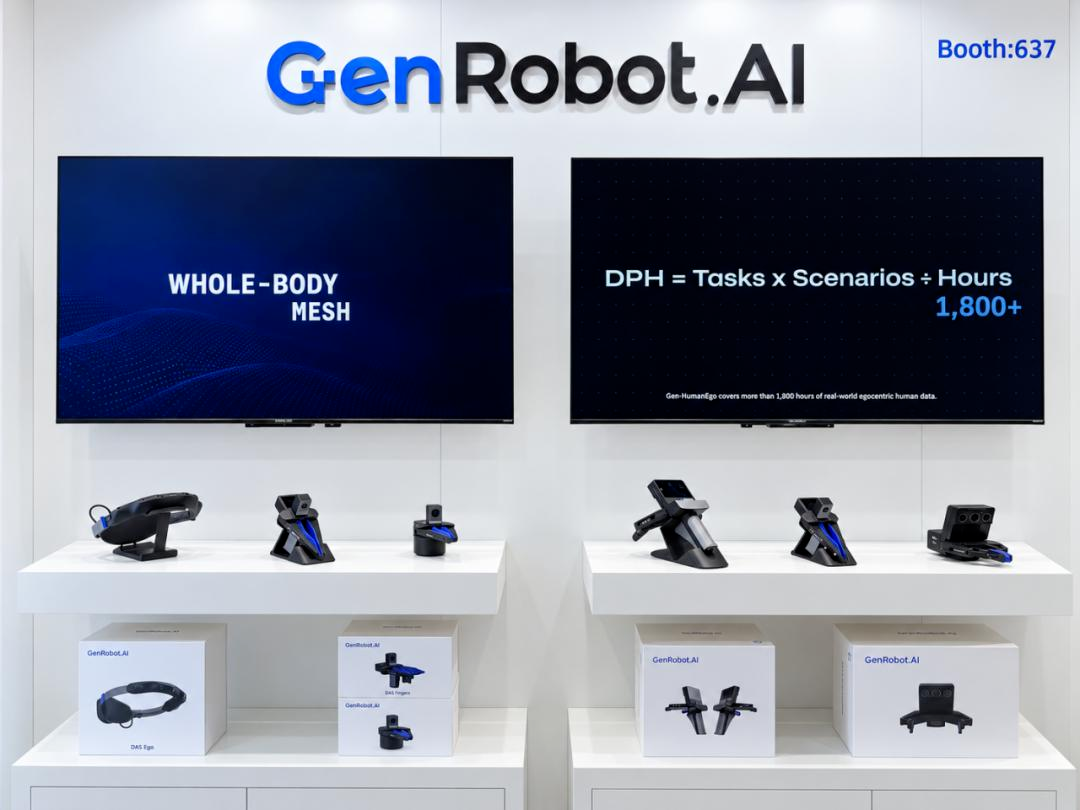
On 2 November, Jianshi Robotics disclosed a USD 100 million A+ round, GenRobot AI disclosed USD 100 million at the same stage, and RoboScience closed a Series A2 in the hundreds of millions of renminbi. All three sell the same thing: the data pipelines that teach humanoids to work.
Data stopped being an accessory
Jianshi, founded in May 2025 by a former Momenta algorithm director, has now raised more than USD 300 million in total. Its shareholder list is the interesting part: SAIC took a stake for production-line data, Baidu for model training, and Galaxea for its own robot fleet. Three buyers with three different motives priced the same vendor separately.
Its delivery volume has moved from around 100,000 hours of usable data per quarter to more than one million hours. The economics explain the rush. Embodied data sells for RMB 500 to 1,000 per hour while collection costs about RMB 30 per hour, a gap wide enough to build a business on.
RoboScience attacked the same market from the cost side, claiming it has pushed the cost of a single training sample to RMB 0.05, roughly one hundredth of conventional methods. If that number holds, the entire premise that robots must collect their own data gets weaker.
Why the whole model maker cannot do this alone
Self-collection has a fixed marginal cost. Every extra hour of real-world data costs another hour of labour, hardware and scene time. Tesla staffs three shifts to gather it. That does not scale down, which is why a vendor that sells data as a product can undercut an in-house team.
The open question is quality conversion. Jianshi quotes usable data, not raw footage. Nobody has published how many hours of messy capture survive cleaning, and the gap between completing large-scale validation and a customer paying repeatedly is still the widest part of the funnel.
What this does to valuations
The sector is now priced in layers. Body makers, model makers and data suppliers each get a different multiple, and only the last category saw three cheques in a single day. That is a directional signal about where the next eighteen months of capital will concentrate.
The check to run on any of them is dull and decisive: how much genuinely new scene data enters the database each day, and whether the second customer pays the same price as the first.
Editor’s note: This is an adapted translation of the original OFweek report. It has been trimmed and restructured for readability for an international business audience. The full original (in Chinese) is at https://robot.ofweek.com/2026-11/ART-8321206-12005-30709971.html.