Embodied intelligence does not only run on the ground. At IROS 2026, researchers showed drones fitted with robotic arms that go up to tighten bolts, a step from walking robots to working ones that happen to fly.

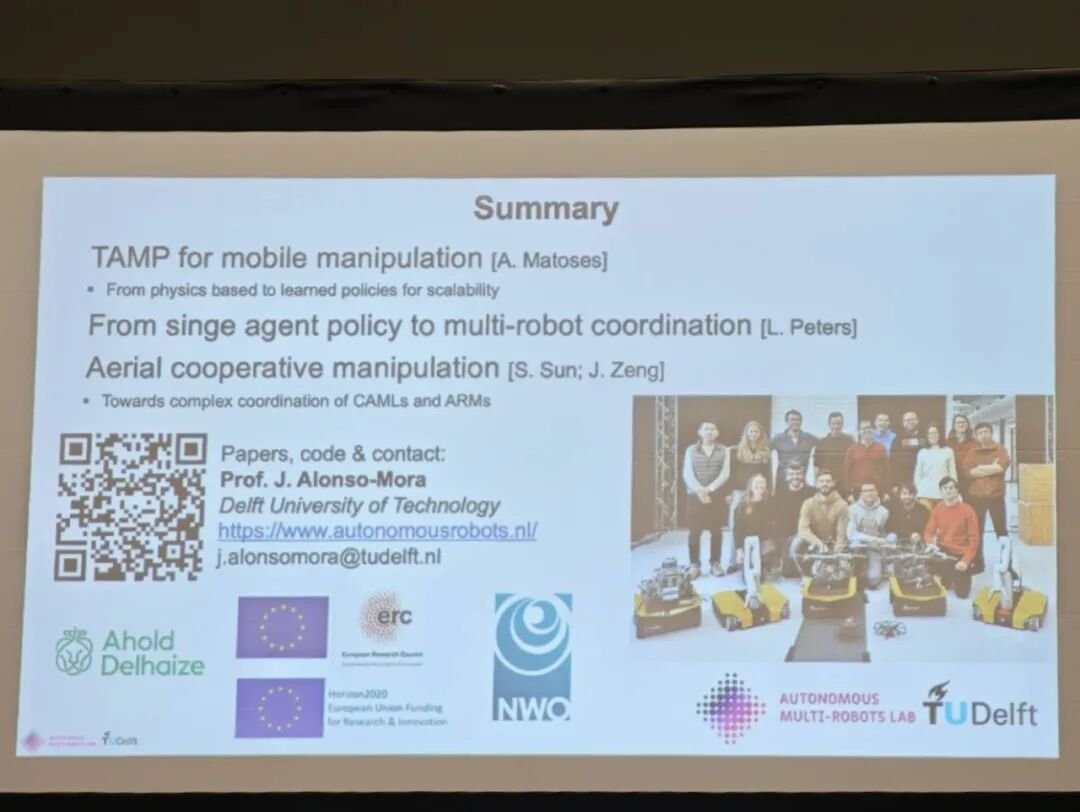
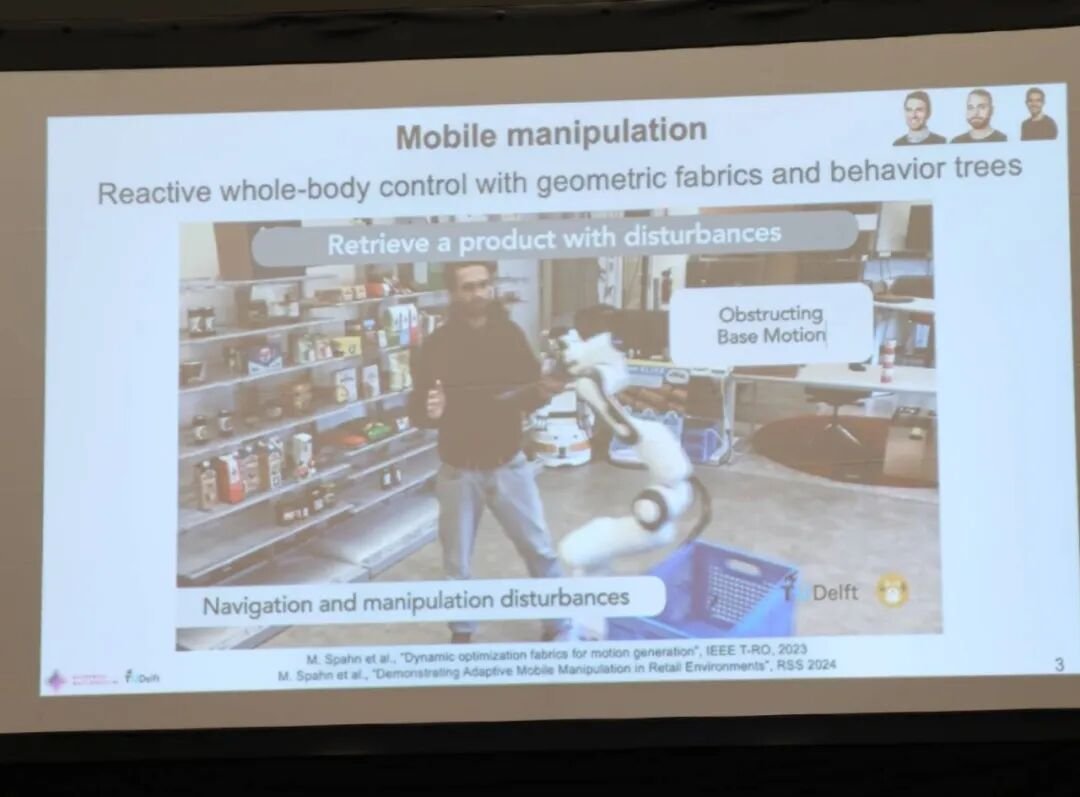
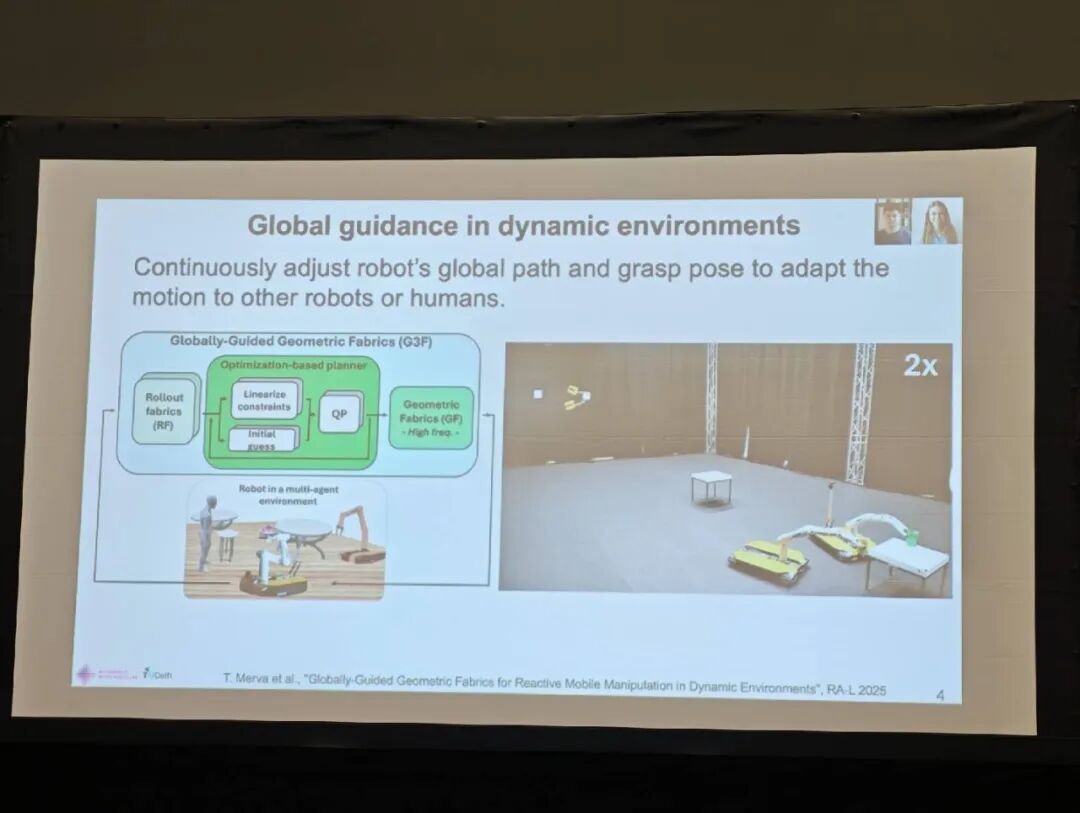
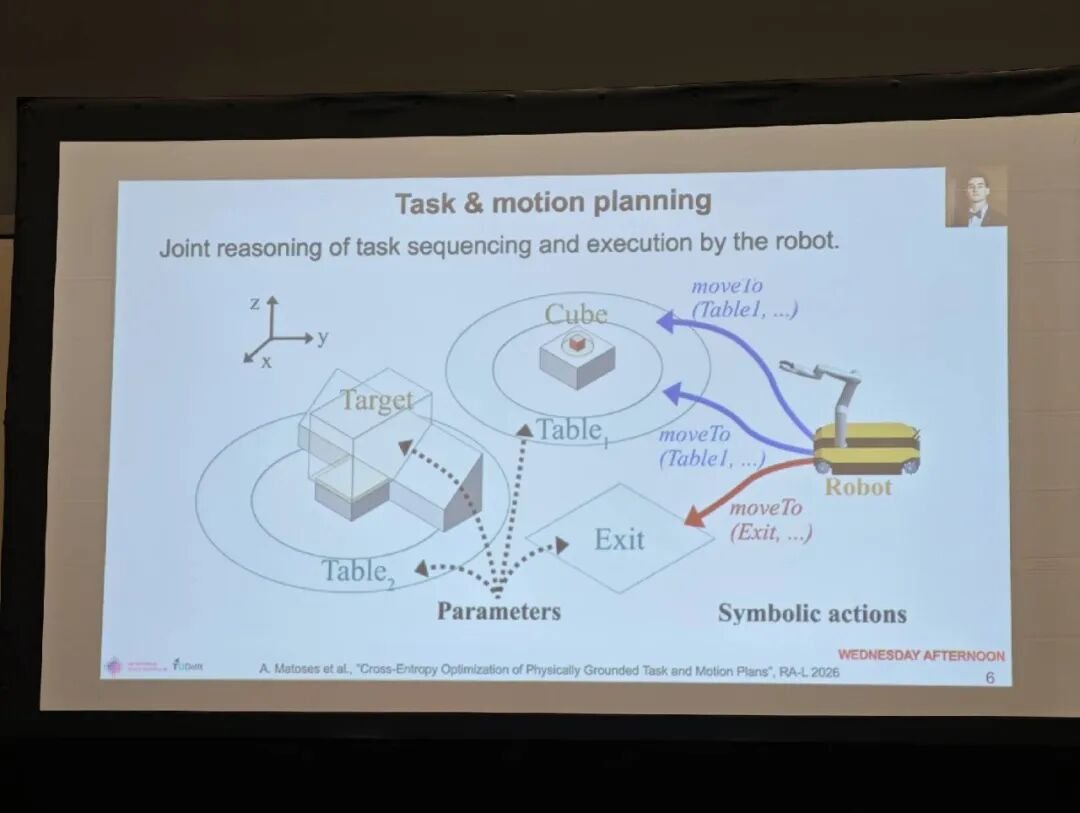
The talk, Mobile Manipulation: From Task and Motion Planning to Aerial Collaboration, laid out the arc. After a robot learns to walk, it must learn to operate while moving. The hard part is no longer the gait but the task performed on the move.
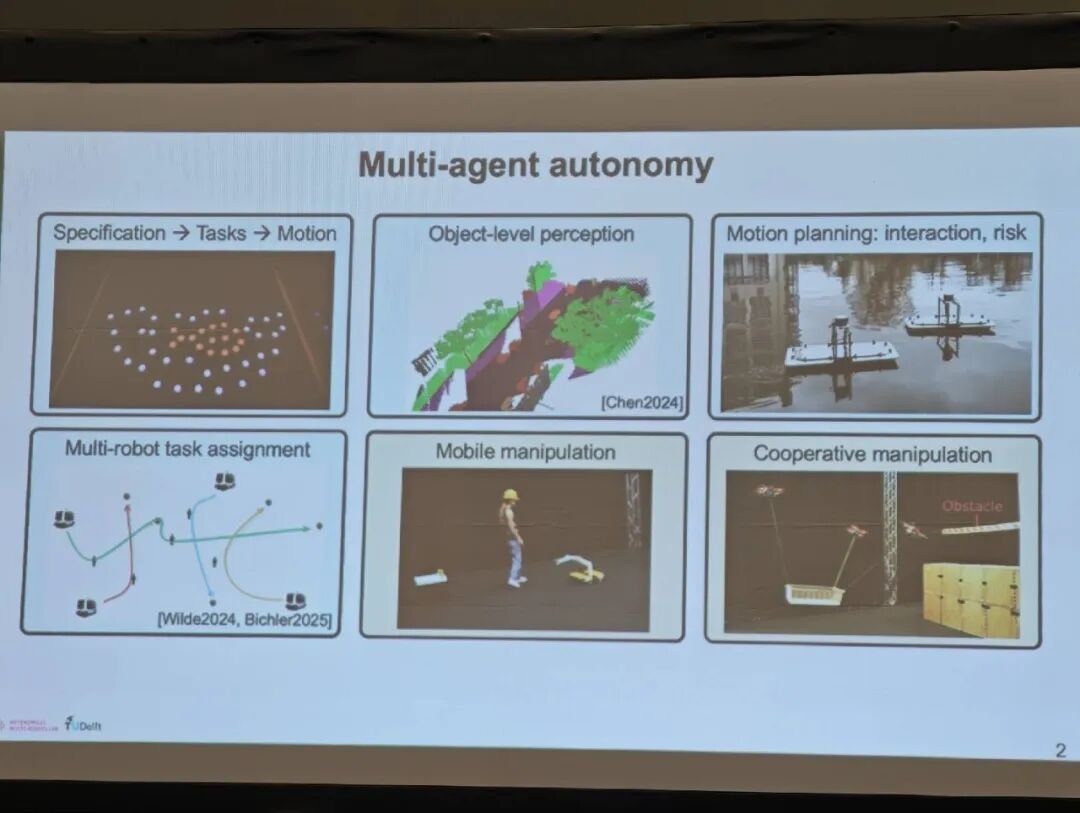
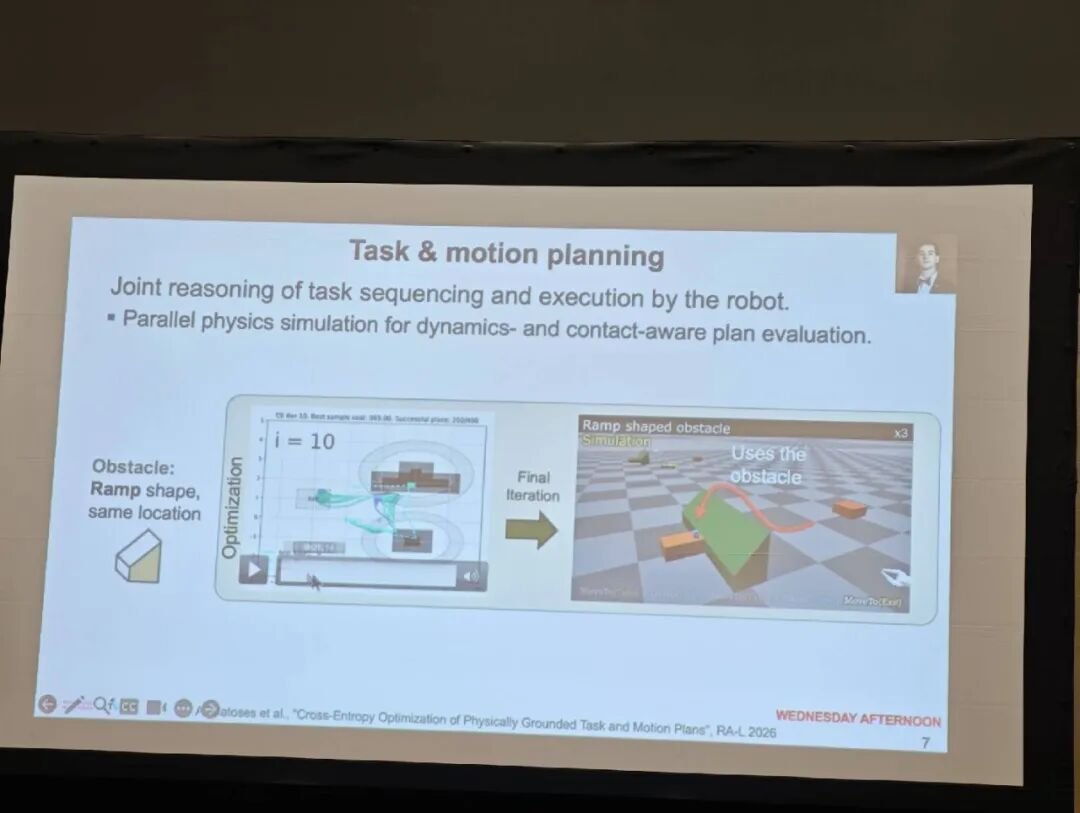
Task and motion planned together let the robot find a faster route by itself rather than following a fixed script. In multi robot collaboration the real bottleneck showed up in demonstration data: teaching several bodies to act as one needs far more paired examples than a single robot.
Mobile manipulation then goes aerial. Drones learn to push boxes, write and tighten bolts, tasks once reserved for stationary arms on a bench. The next target is drone teams that build structures together, coordinating payload and pose without a human holding the wrench.
In the Q and A, the speaker addressed distributed state estimation when several drones jointly carry a load. Because the payload carries no marker, the system cannot rely only on each drone’s IMU, and the drones use a consensus algorithm to estimate the load’s position together. For cable suspended cooperative transport, the model assumes the cable stays taut.
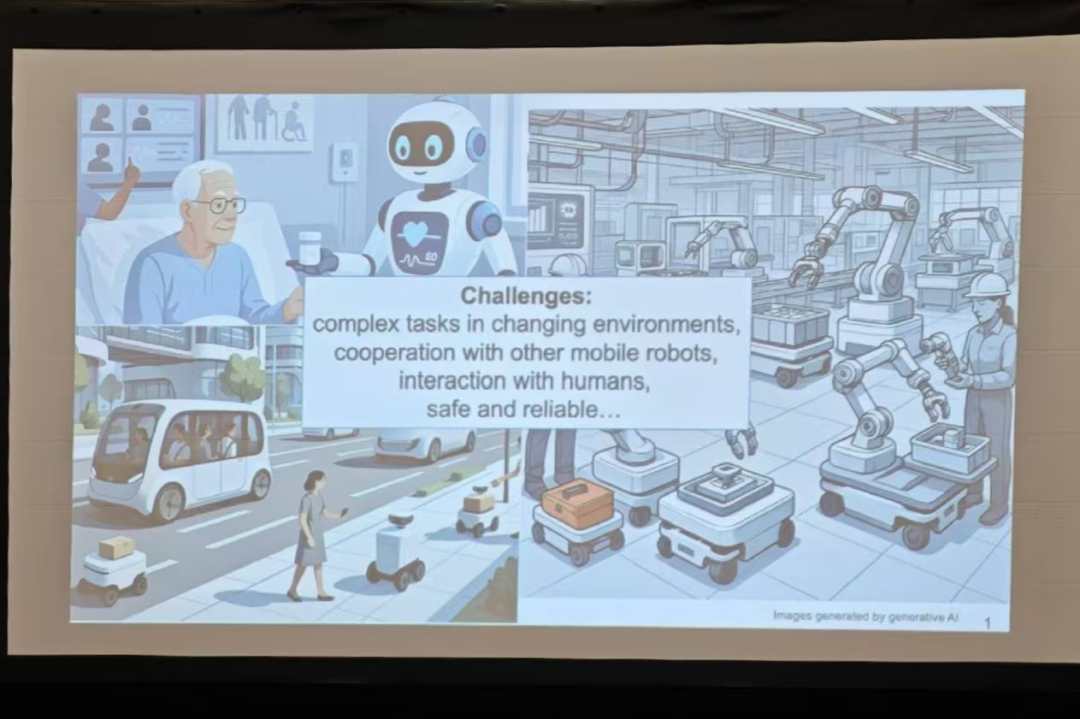
The throughline is that manipulation is leaving the fixed base. Whether the body rolls, walks or flies, the research frontier is now coordination: many bodies, one task, and software that plans motion and action at the same time.
Editor’s note: This is an adapted translation of the original Leiphone report. It has been trimmed and restructured for readability for an international business audience. The full original (in Chinese) is at https://www.leiphone.com/category/academic/XSVcStujND4eWLFZ.html.