From a launch event to a shift roster
In 2026 one of the hardest questions in embodied intelligence is how to actually land in the real world. AgiBot calls this the “deployment state”: robots leave the stage and the trade show and enter production and service environments where they have to work every day. A single robot nailing a hard move on stage makes a headline. Several hundred robots clocking in on time, in real crowds, and improving with operation is what actually tests a company’s industrialisation.
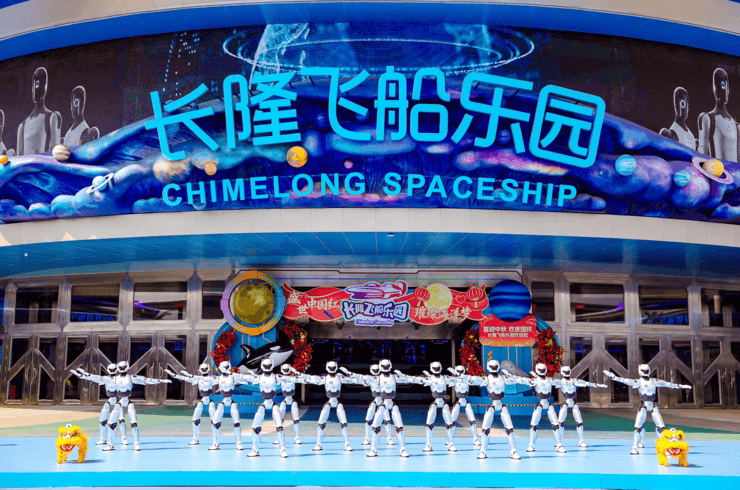
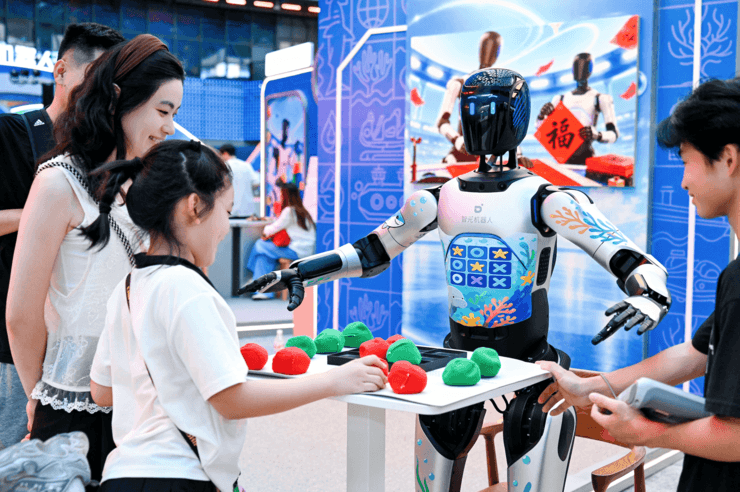
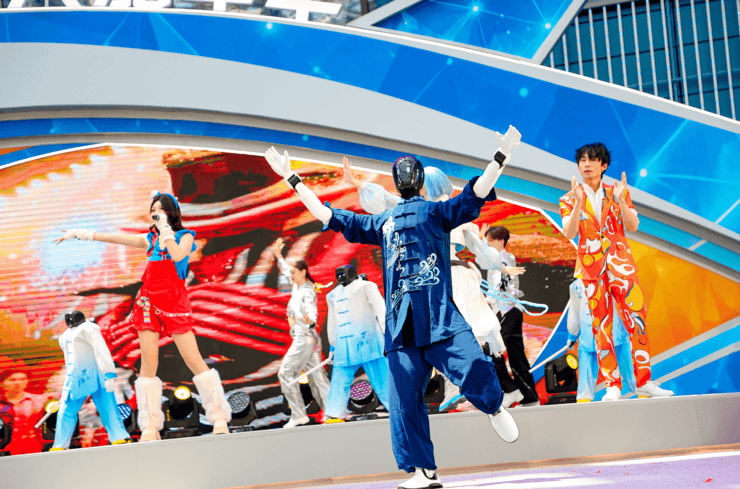
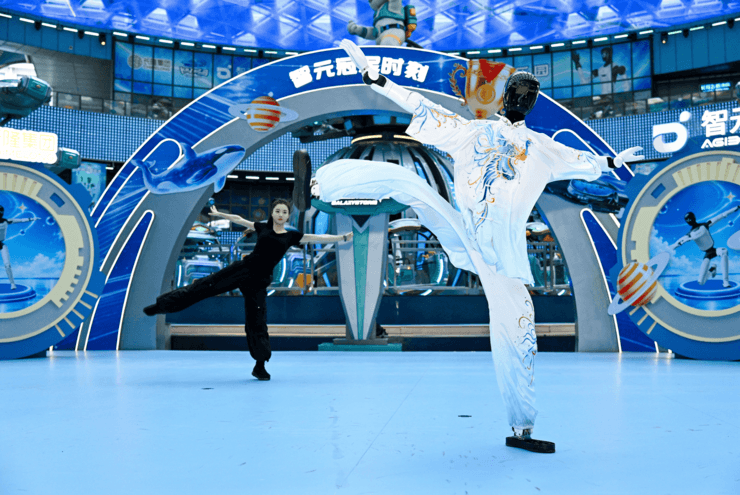
On 24 September AgiBot gave its answer. Chimelong’s Spaceship Park in Hengqin, billed as the world’s first large-scale embodied-intelligence theme park, opened its refreshed park with more than 300 AgiBot robots across over 100 interaction points, covering seven scenarios: entertainment shows, science education, guiding, service retail, smart companionship, hotels and sport. The 300-plus units are only the first phase. The full system is expected to reach several thousand robots.
The same day, AgiBot’s 20,000th embodied robot, the Yuanzheng A3 Ultra, rolled off the line and was delivered to Chimelong. The “Chimelong x AgiBot Embodied Cultural-Tourism Joint Lab” was unveiled, and a large-scale 5G-A embodied-intelligence application for tourism, co-developed with China Mobile, was released.
Two scenes, two kinds of productivity
The 20,000-unit milestone marks a shift in where the robots go. AgiBot’s 15,000th robot was delivered into Longcheer’s production line, representing industrial labour productivity. The 20,000th went to Chimelong, representing service productivity. The two scenarios demand very different capabilities. AgiBot is using both real settings to prove embodied intelligence as both a labour force and a service force, and to find a product and deployment capability that copies across scenes.
Chimelong is a large, complex and long-term testing ground. The park is the world’s largest indoor theme park and has received more than ten million visitors since opening. Huge crowds and messy scenes make it a high-frequency, unstructured test bed. Wang Chuang, AgiBot partner and senior vice president, noted that robot performances were already a mature application in 2025, often on a rental model where the robot left after the event. This time the model changed: robots stay in the park on fixed shifts, performing multiple shows a day.
Three global firsts in operations
The deployment delivered three claimed global firsts. A large-scale 5G-A embodied application for tourism uses network slicing plus edge deployment with security isolation for ultra-low latency. A one-stop management platform takes robot service from go live to long-term operable. A routine-deployment safety framework covers space, personal safety, charging and fire, AI, data and operations.
The technical base is AgiBot’s “three intelligences in one” full-stack architecture: motion intelligence as the physical executor, interaction intelligence as the entry point for emotional value (service productivity), and task intelligence as the engine for labour value (labour productivity). The Yuanzheng line was modified for the park. Ten-hour battery life leads the world against an industry average near three hours, with at most one battery swap a day. The acoustic front-end, algorithm noise reduction, multi-person recognition and lip reading handle the crowd. A 360-degree omnidirectional perception stops a moving arm if someone enters the zone, and compliant control on the arms lowers collision force.
The operating maths
Technology still has to land on a concrete operating ledger. A human tour guide needs shifts and rest. A robot can hold long, repetitive explanation duties. For an international resort, staffing every language means hiring per language, while one robot can support dozens of languages. Chimelong receives more than 40 million visitors a year, with overseas visitors up nearly 50 per cent in the past year, so the interaction demand is unusually complex.
Wang Chuang said AgiBot will cut cost on two fronts: raising the human-to-robot ratio from three-to-one toward ten-to-one and twenty-to-one as autonomy improves, and extending robot service life so the per-use cost falls. The real industrialisation question is whether the robot can keep working, cut human intervention and spread its cost across a longer life.
2026 as the year of deployment
AgiBot calls 2026 the first year of the embodied “deployment state”. The industry metric shifts from body parameters and demo polish to whether a robot can stay on duty reliably among hundreds of thousands of visitors, stay operable rather than merely online, and get better with time. Xiong Yan, AgiBot partner and co-president, said the deployment’s interaction ability and environmental fit improved “with each passing day” over about a month, fed by operational data and model tuning.
AgiBot estimates it will take at least three to five years before a robot needs no human debugging at all, but that does not stop robots entering every industry now. The real test, as the company frames it, is whether the robot keeps working and whether a year from now it works better than today.
Editor’s note: This is an adapted translation of the original Leiphone report. It has been trimmed and restructured for readability for an international business audience. The full original (in Chinese) is at https://www.leiphone.com/category/robot/23F3DiDtv7Puosqy.html.